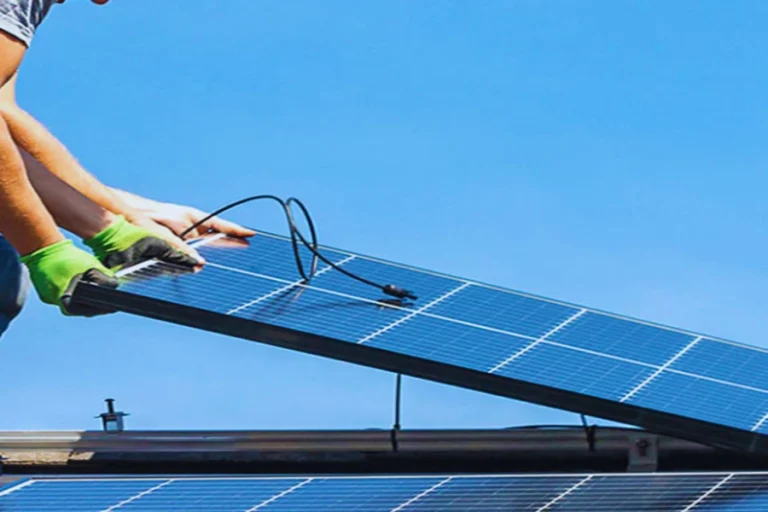
How to Reduce Solar Panel Replacement Costs: Engineering & Repair Guide
Understanding how to reduce solar panel replacement costs represents one of the most critical financial and operational strategies for modern photovoltaic asset management. When residential, commercial, or utility-scale solar installations cross their initial operational thresholds, asset owners frequently confront degraded energy yields, component failures, or physical damage caused by severe weather events. While standard manufacturer warranties provide baseline safety nets, navigating premature degradation or out-of-warranty failures can introduce staggering capital expenditures if approached reactively.
Property owners and facility managers often assume that maintaining an aging photovoltaic array requires wholesale system replacement once energy generation begins to taper off. However, professional asset management demonstrates that most generation deficits stem from isolated component failures, inverter malfunctions, or minor wiring degradation rather than catastrophic silicon breakdown. Addressing declining performance demands an analytical shift away from expensive overhauls toward targeted restorative engineering.
Knowing how to reduce solar panel replacement costs requires dissecting the intricate variables of module degradation rates, balance-of-system lifecycles, and warranty enforcement mechanisms. This comprehensive reference article provides an exhaustive, engineering-focused framework to help professionals diagnose system faults, maximize component lifespans, and minimize capital outlays when managing photovoltaic renewals.
Understanding how to reduce solar panel replacement costs
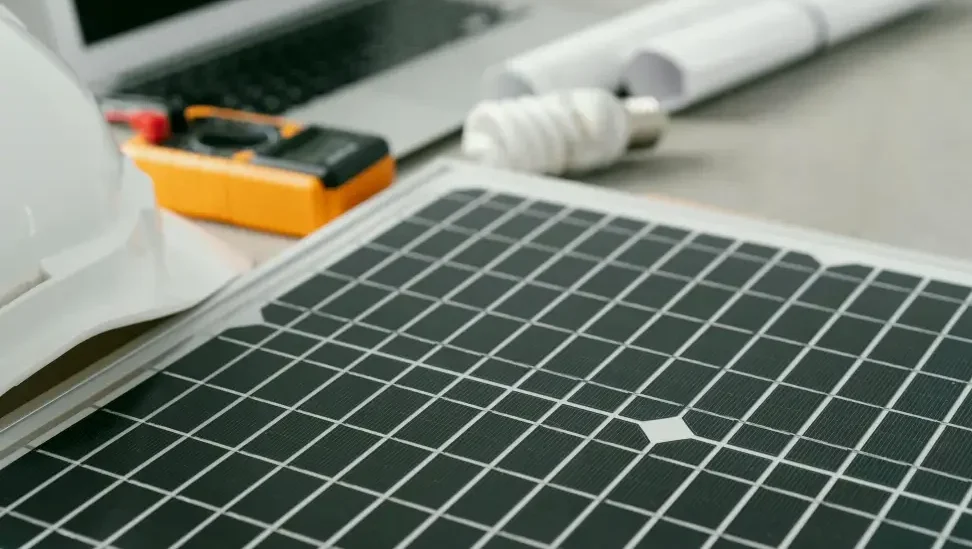
The process of learning how to reduce solar panel replacement costs is frequently oversimplified in consumer media as a matter of shopping for discount hardware or delaying necessary maintenance until complete system failure occurs. In professional renewable energy engineering, minimizing replacement expenses is a sophisticated discipline rooted in root-cause diagnostics, warranty litigation, component-level repair, and thermodynamic preservation. A common misconception is that solar panels degrade uniformly across an entire array, prompting owners to discard functional strings prematurely due to localized drop-offs caused by shading or single-unit failures.
The primary risk of oversimplifying cost reduction is executing premature whole-system swaps when targeted component interventions—such as microinverter replacements, optimizer upgrades, or diode repairs—would restore optimal performance at a fraction of the expense. Furthermore, ignoring the logistical and soft costs associated with permitting, crane rentals, and specialized labor can quickly invalidate any savings achieved through wholesale equipment purchasing discounts.
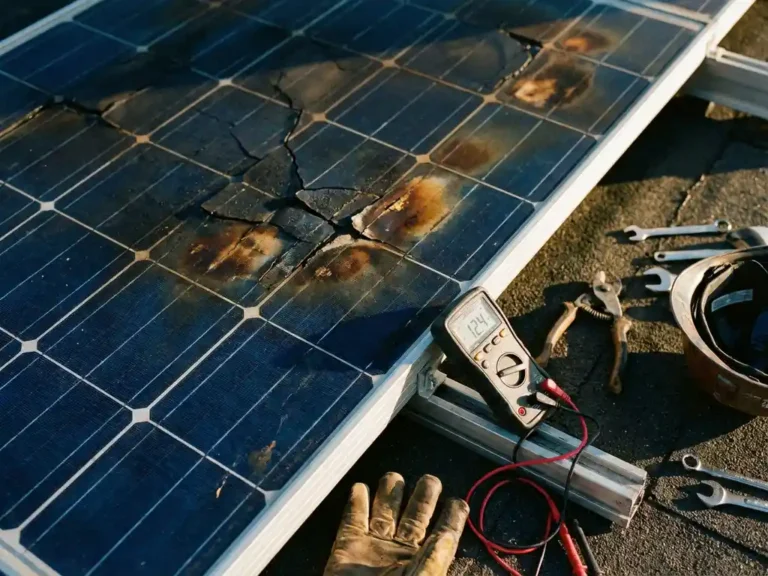
True optimization demands evaluating the thermodynamic and electrical relationships governing the entire photovoltaic ecosystem. By understanding how environmental stressors accelerate micro-cracking, potential-induced degradation (PID), and encapsulant browning, asset managers can implement proactive maintenance strategies that defer capital replacement cycles by over a decade.
Deep Contextual Background: The Evolution of Photovoltaic Lifecycles
The historical trajectory of solar photovoltaic manufacturing reflects a dramatic shift in durability standards. Early commercial and residential installations deployed in the late 1990s and early 2000s utilized rudimentary encapsulation materials and thicker, lower-efficiency crystalline silicon wafers. While these older modules exhibited lower initial power densities, their robust framing and conservative electrical tolerances often allowed them to outlast their nominal twenty-year power warranties with predictable, linear degradation rates.
As the industry scaled rapidly over the subsequent decades, competitive pressures drove manufacturers to thinner silicon wafers, frameless designs, and complex passivated emitter and rear contact (PERC) architectures. While these modern technologies dramatically increased energy conversion efficiencies and lowered initial capital expenditures per watt, they introduced new vulnerabilities to thermal stress, mechanical flexing, and moisture ingress. Consequently, contemporary asset managers face a more complex failure landscape than their predecessors.
The current regulatory and manufacturing environment is shaped by stringent international standards—such as IEC 61215 and IEC 61730—which establish baseline stress durability for crystalline silicon modules. However, field performance heavily depends on local microclimates, installation precision, and inverter matching. Modern asset management views the solar array not as a static appliance, but as an active semiconductor ecosystem requiring continuous health monitoring and strategic intervention to maximize operational horizons.
Conceptual Frameworks and Mental Models
Navigating photovoltaic replacement economics requires structured mental models that synthesize material science, financial amortization, and electrical engineering.
1. The Degradation-Versus-Failure Divergence Model
This mental model separates normal, linear power degradation (typically 0.4% to 0.5% annually) from abrupt, non-linear component failures (such as junction box meltdowns or glass shattering). Conflating these two phenomena leads to costly premature replacements; linear degradation is an expected operational baseline, whereas sudden drop-offs require targeted electrical isolation rather than wholesale panel disposal.
2. The Total Cost of Ownership (TCO) Amortization Curve
This financial model maps the cumulative operational expenditures and lost energy revenue against the capital outlay of replacement hardware. It demonstrates that deferring replacement through targeted repair often maximizes net present value (NPV), provided that the maintenance costs do not exceed the value of the recovered energy yield.
3. The Balance-of-System Interdependence Matrix
Solar panels rarely operate in isolation. This framework evaluates how failing balance-of-system components—such as string inverters, optimizers, and DC wiring harnesses—mimic the symptoms of panel failure. Before investing in new modules, this model dictates verifying that voltage bottlenecks originate within the laminate itself rather than auxiliary electrical hardware.
Key Categories, Variations, and Technical Trade-Offs
When addressing declining system performance, asset managers can choose from several distinct intervention strategies. Each approach involves specific trade-offs regarding capital outlay, labor intensity, and expected performance recovery.
1. Targeted Component Spot Replacement
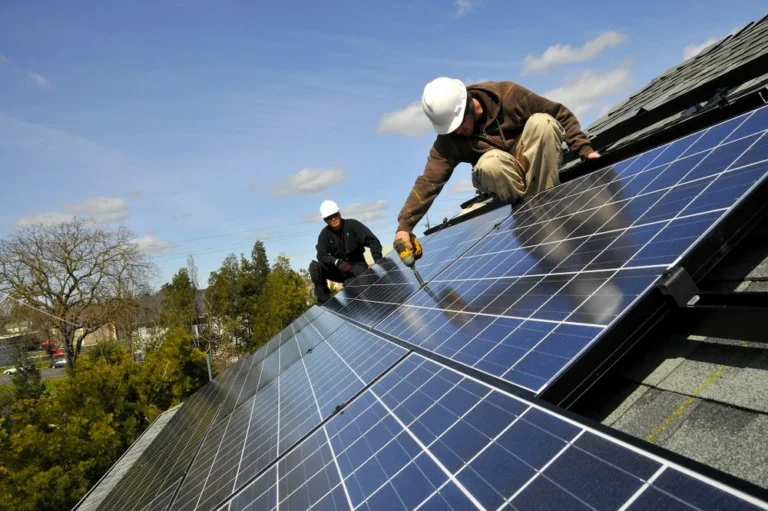
Isolating and replacing only the specific degraded or damaged photovoltaic modules within an existing string or array.
-
Trade-offs: Minimal capital expenditure; potential voltage and current mismatch issues if exact replacement wattages and electrical characteristics do not align with legacy modules.
2. Remanufactured and Refurbished Secondary-Market Panels
Sourcing tested, second-life photovoltaic modules salvaged from decommissioned utility-scale projects to replace failing units.
-
Trade-offs: Substantially lower material costs; shorter remaining warranty coverage and potential variance in aesthetic appearance and degradation history.
3. Inverter and Optimizer Retrofitting (Avoiding Panel Swaps)
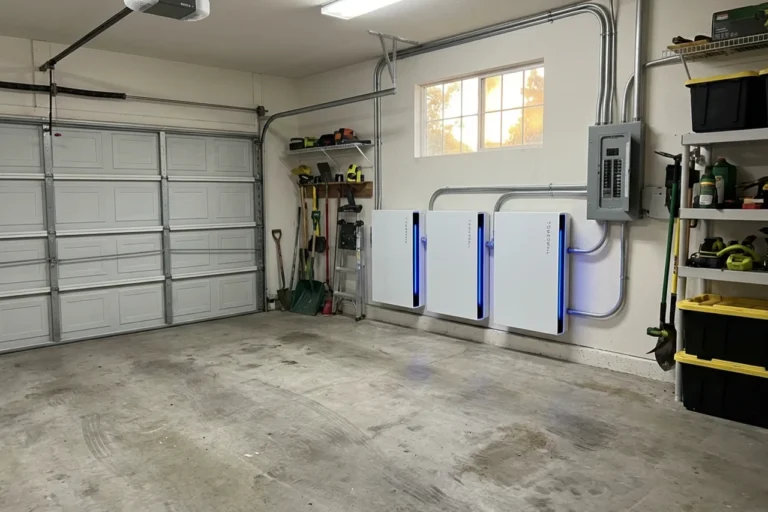
Upgrading aging string inverters or adding module-level power electronics (MLPE) to revive underperforming strings without touching the physical panels.
-
Trade-offs: Resolves systemic clipping and mismatch issues efficiently; does not fix physical laminate damage, delamination, or glass breakage.
4. Comprehensive Repowering (Full Array Swap)
Dismantling the entire legacy array and replacing all modules with high-efficiency modern monocrystalline units.
-
Trade-offs: Maximizes nameplate capacity and resets the warranty clock; massive upfront capital investment and high labor overhead.
5. Junction Box and Diode Rebuilding
Repairing failed bypass diodes or burned junction boxes directly on-site rather than discarding the entire panel.
-
Trade-offs: Extremely low cost; requires specialized electrical certification and careful weatherproofing to prevent future moisture ingress.
6. Architectural BIPV Laminate Overlays
Applying lightweight polymer photovoltaic laminates over existing compromised roof structures to eliminate mounting hardware replacement costs.
-
Trade-offs: Reduced dead load and avoided roofing penetration costs; lower baseline conversion efficiency and shorter adhesive bond lifespans.
Photovoltaic Intervention Strategies Comparison Table
| Strategy | Capital Investment | Labor Complexity | Performance Recovery | Primary Risk Factor |
| Component Spot Replacement | Low – Moderate | Moderate | High (Targeted) | Electrical string mismatch |
| Refurbished Panel Sourcing | Low | Low – Moderate | Moderate | Unknown historical degradation |
| Inverter / MLPE Retrofitting | Moderate | Moderate | High (System-wide) | Incompatibility with legacy wiring |
| Full Array Repowering | Very High | High | Maximum | Excessive upfront capital drain |
| Junction Box Rebuilding | Very Low | Moderate | High (Per panel) | Workmanship quality / moisture risk |
| Polymer Laminate Overlays | Moderate | High | Moderate – High | Adhesive degradation over time |
Realistic Decision Logic
Determining the optimal intervention path when exploring how to reduce solar panel replacement costs requires a structured, multi-step engineering filter:
-
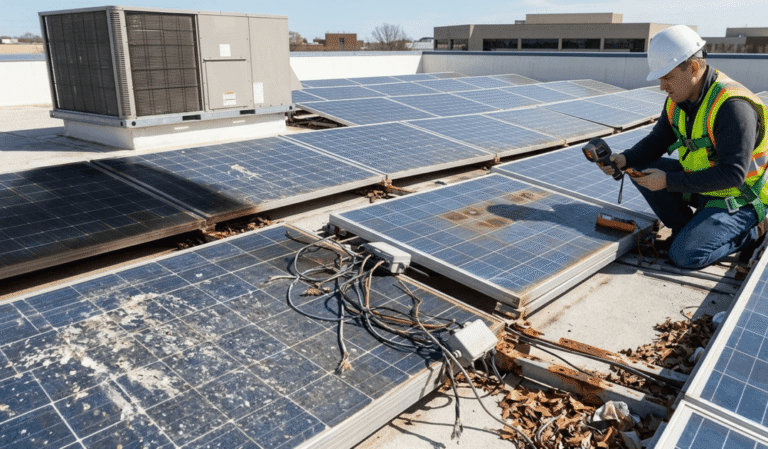
Step 1: Conduct electrical string tracing and thermographic scans to identify whether underperformance is systemic across the array or isolated to specific modules.
-
Step 2: Review existing manufacturer warranty documentation. If failing panels fall within their linear power warranty period, initiate a formal warranty claim to secure free or subsidized replacement units.
-
Step 3: If out-of-warranty, calculate the cost-per-watt of spot-replacing damaged modules versus executing an inverter-level optimization upgrade to restore string equilibrium.
Detailed Real-World Scenarios
Photovoltaic degradation and replacement dynamics vary widely based on geographic exposure, installation scale, and environmental stressors. Five detailed scenarios illustrate these operational complexities.
A : Severe Hail Impact on a Commercial Rooftop Array
-
Context: A large-scale commercial flat-roof installation in the American Midwest struck by a severe localized hailstorm, resulting in shattered front glass on approximately 4% of the modules.
-
Constraints: Strict commercial insurance deductible limits; immediate risk of micro-cracks spreading and causing electrical ground faults.
-
Decision Point: Filing an insurance claim to fund selective spot-replacement of the shattered modules, combined with high-resolution electroluminescence (EL) imaging to screen adjacent panels for invisible micro-cracks.
-
Failure Modes: Overlooking microscopic star-cracks in adjacent modules that subsequently expand under thermal stress, triggering delayed ground faults.
-
Second-Order Effects: Insurance premium adjustments offset by avoiding total array replacement, preserving the financial viability of the commercial property lease.
B : Coastal Salt-Mist Corrosion and Frame Delamination
-
Context: A residential coastal array experiencing aggressive frame corrosion, encapsulant yellowing, and severe power output drop-offs after twelve years of operation.
-
Constraints: High chloride deposition rates; strict municipal electrical codes regarding corrosion-resistant replacement hardware.
-
Decision Point: Executing a partial repowering of the most severely degraded modules using marine-grade anodized aluminum frames and stainless steel fasteners, coupled with dielectric barrier gel applications.
-
Failure Modes: Galvanic corrosion continuing to attack legacy mounting hardware adjacent to the new replacement modules.
-
Second-Order Effects: Extended operational lifespan for the remaining array sections, balanced against higher ongoing maintenance frequency in corrosive marine microclimates.
C : Utility-Scale PID Degradation and Module Recovery
-
Context: A 5-megawatt ground-mount solar farm experiencing rapid, unexpected power loss across multiple inverter blocks due to severe potential-induced degradation (PID).
-
Constraints: High financial penalties under power purchase agreements (PPAs) for failing to meet contracted energy delivery volumes.
-
Decision Point: Installing nighttime PID reversal inverters rather than purchasing replacement modules, successfully polarizing the voltage back and recovering 95% of lost panel capacity.
-
Failure Modes: Irreversible silicon lattice damage in modules where PID was left unmitigated for excessive operational cycles.
-
Second-Order Effects: Massive capital savings by avoiding module replacement, transforming a projected multi-million dollar capital expenditure into a modest inverter upgrade expense.
D : Legacy Inverter Discontinuation and Voltage Mismatch
-
Context: A residential portfolio featuring an aging string inverter that failed permanently, with exact replacement models discontinued by the manufacturer.
-
Constraints: Incompatible DC voltage windows between old high-voltage panels and modern commercial replacement inverters.
-
Decision Point: Retrofitting module-level power optimizers onto the legacy panels to normalize voltage output, allowing seamless integration with a modern, high-efficiency string inverter.
-
Failure Modes: Optimizer communication dropouts caused by signal attenuation over degraded legacy DC wiring runs.
-
Second-Order Effects: Enhanced system safety with rapid shutdown compliance achieved, avoiding the unnecessary replacement of thousands of still-functional solar panels.
E : Manufacturing Defect and Class-Action Warranty Fulfillment
-
Context: A portfolio of commercial properties utilizing solar panels from a manufacturer that subsequently declared bankruptcy due to widespread backsheet delamination defects.
-
Constraints: Total loss of original manufacturer warranty backing; accelerating fire hazards caused by exposed conductive backsheets.
-
Decision Point: Partnering with an independent engineering firm to quantify risk exposure, utilizing legal settlement reserves to partially fund a phased replacement program prioritizing high-temperature hot-spot panels.
-
Failure Modes: Electrical arcing igniting dry roofing substrates due to delayed replacement of delaminated polymer backsheets.
-
Second-Order Effects: Temporary energy production curtailment during phased swaps, balanced by long-term risk mitigation against catastrophic structural fire events.
Planning, Cost, and Resource Dynamics
Financial and resource allocation for photovoltaic replacement and repair requires balancing direct hardware costs against complex indirect expenses. While purchasing replacement solar panels represents the most visible line item, soft costs frequently dictate the financial success of the intervention.
Direct costs encompass replacement module hardware, specialized DC connectors, mounting clips, wiring harnesses, and inverter units. Indirect costs often constitute the majority of project expenditures: crane and lifting equipment rentals, scaffolding setup for steep roofs, certified electrical labor hours, municipal permitting and engineering sign-offs, and grid-interconnection review fees.
Opportunity costs also play a critical role in project planning. Shutting down active solar strings during peak daylight hours to perform module swaps results in immediate lost energy production revenue. Consequently, asset managers must weigh the cost of executing rapid night-time or low-irradiance maintenance windows against daytime generation losses.
Cost and Resource Dynamics
| Expense Category | Spot Replacement (Per Module) | Inverter Retrofit (System-Wide) | Full Array Repowering | Primary Cost Drivers |
| Material Costs | Low ($200 – $400 / unit) | Moderate ($2,500 – $6,000) | Very High ($15,000 – $50,000+) | Module wattage, MLPE hardware |
| Labor Allocation | 2 Technicians (1 Day) | 2-3 Technicians (1-2 Days) | Full Crew (1-2 Weeks) | Crane operation, union labor rates |
| Permitting & Engineering | Minimal | Moderate | Comprehensive | Structural load and electrical reviews |
| Production Downtime | Minimal (Hours) | Low (1 Day) | Moderate (Multiple Days) | Lost PPA revenue, grid curtailment |
Tools, Strategies, and Support Systems
Executing precise diagnostics and cost-effective interventions when evaluating how to reduce solar panel replacement costs requires deploying advanced testing equipment and analytical support frameworks:
-
Electroluminescence (EL) Imaging Cameras: Portable infrared and near-infrared testing devices used in dark conditions to reveal invisible micro-cracks, broken fingers, and cell defects inside solar laminates.
-
Unmanned Aerial Drone Thermography: High-resolution thermal imaging drones capable of scanning expansive commercial or utility-scale arrays in minutes to pinpoint anomalous hot spots and failing bypass diodes.
-
Curve Tracers (I-V Curve Analyzers): Precision diagnostic instruments measuring current-voltage characteristics in real-time to detect string mismatch, series resistance faults, and degradation signatures.
-
Insulation Resistance (Megger) Testers: Electrical safety devices verifying dielectric integrity and detecting moisture ingress or micro-cracks in DC wiring and module frames.
-
Thermal Imaging Multimeters: Handheld diagnostic tools used by technicians to evaluate junction box operating temperatures and identify high-resistance electrical connections.
-
Asset Performance Management (APM) Software: Cloud-based monitoring platforms tracking string-level degradation trends and flagging production anomalies against weather-adjusted baselines.
-
Manufacturer Warranty Tracking Databases: Centralized digital ledgers logging serial numbers, purchase dates, and sliding-scale power output guarantees across distributed portfolios.
Risk Landscape and Failure Modes
Managing photovoltaic replacement and repair introduces distinct technical and operational safety hazards that require rigorous mitigation protocols.
1. DC Arc Faults and Fire Hazards
Solar panels continuously generate direct current whenever exposed to ambient light, making them impossible to turn off manually during daylight hours. When compromised panels or damaged wiring are handled improperly during replacement, high-voltage DC arcing can occur. If these arcs strike dry roofing materials or damaged backsheets, they can rapidly ignite catastrophic structural fires.
2. Structural Dead-Load Mismatches
When replacing older, lighter solar panels with modern, higher-wattage modules that feature heavier glass-on-glass construction, asset managers risk exceeding the structural load limits of the underlying roof deck or mounting rails. This mismatch can lead to structural sagging, fastener fatigue, and roof collapse during heavy snow or high-wind events.
3. Warranty Fragmentation and Legal Exposure
Mixing disparate module brands and electrical specifications within an existing string can void remaining manufacturer warranties across the entire circuit. Furthermore, unauthorized replacement work performed without certified engineering sign-offs can invalidate commercial property insurance policies in the event of an electrical failure or storm loss.
Governance, Maintenance, and Long-Term Adaptation
Maintaining optimal photovoltaic health and minimizing the necessity for premature hardware replacements requires a structured governance framework that merges continuous data monitoring with physical inspection cycles.
1. Continuous String-Level Monitoring
Asset operators should implement granular monitoring platforms that track energy yields at the string or module level. Unlike high-level utility meter tracking that only reveals total system output, granular monitoring isolates failing components instantly, allowing teams to address localized hot spots before they destroy entire modules.
2. Routine Inspection Protocols
Physical and diagnostic maintenance regimes should adhere to strict seasonal schedules:
-
Post-Winter Thermal Audits: Scanning arrays for snow-load deformation, frame shifting, and thermal anomalies caused by freeze-thaw cycles.
-
Annual Insulation Testing: Performing megohmmeter tests on DC circuits to verify that aging wiring insulation has not degraded due to UV exposure or moisture.
-
Bypass Diode Functionality Checks: Testing junction box diodes annually to ensure they successfully route current around shaded or damaged cells without overheating.
3. Adjustment Triggers and Layered Checklists
Facility managers should establish quantitative performance thresholds that trigger immediate engineering intervention:
-
Trigger 1: An unexplained annual power degradation rate exceeding 1.5% across any individual string.
-
Trigger 2: Any thermal anomaly detected via drone thermography exhibiting a temperature differential greater than 15°C above ambient module operating temperature.
-
Trigger 3: Persistent ground-fault alarm codes generated by string inverters during humid weather conditions.
Measurement, Tracking, and Evaluation
Assessing the long-term efficacy of photovoltaic repair and replacement strategies requires balancing quantitative electrical metrics against qualitative asset preservation indicators.
Quantitative Indicators (Leading vs. Lagging)
-
Leading Indicators: Insulation resistance measurements, I-V curve fill-factor stability, and module operating temperature differentials.
-
Lagging Indicators: Specific energy yield ($\text{kWh}/\text{kWp}$), financial payback velocity of replacement investments, total annual maintenance expenditure per megawatt, and warranty claim success ratios.
Qualitative Signals
-
Surface aesthetic uniformity (absence of severe encapsulant browning, snail trails, or glass delamination across module faces).
-
Mechanical stability (firm torque retention on mounting hardware, zero corrosion on framing channels, and secure grounding bond continuity).
Operational Documentation Examples
To satisfy commercial property insurers, financial lenders, and warranty administrators, asset management teams should maintain a comprehensive digital asset log containing:
-
As-Built Electrical Schematics: Detailed layouts mapping string configurations, inverter serial numbers, and module placement coordinates.
-
Diagnostic Audit Logs: Historical EL imaging scans, I-V curve test results, and thermographic survey reports.
-
Intervention Records: Chronological logs of component replacements, warranty claim approvals, engineering sign-offs, and maintenance labor hours.
Common Misconceptions and Oversimplifications
-
Misconception 1: All solar panels degrade at the exact same linear rate throughout their entire operational life.
-
Correction: Degradation is non-linear; infant mortality failures occur early, stable linear degradation follows for decades, and accelerated wear often spikes toward the end of a module’s lifecycle.
-
-
Misconception 2: Replacing a single broken solar panel with a higher-wattage modern model automatically boosts total string output.
-
Correction: In series strings, current is bottlenecked by the lowest-performing module; inserting a mismatched module without proper power electronics can drag down the output of the entire circuit.
-
-
Misconception 3: If a solar panel’s glass is scratched, it must be replaced immediately.
-
Correction: Surface scratches or minor front-glass pitting rarely impact energy yield significantly unless they cause structural delamination or allow moisture ingress into the encapsulation layers.
-
-
Misconception 4: Manufacturer power warranties guarantee that you will receive free replacement panels if output drops.
-
Correction: Warranties typically cover only the prorated cost of the hardware minus shipping and labor, and proving a manufacturing defect often requires costly independent laboratory testing.
-
-
Misconception 5: Cleaning dirty solar panels eliminates the need for component replacement.
-
Correction: While regular washing restores lost production from soiling, it cannot reverse physical semiconductor degradation, micro-cracking, or junction box failures.
-
-
Misconception 6: Standard property insurance automatically covers all costs associated with storm-damaged solar arrays.
-
Correction: Many commercial and residential policies carry high wind/hail deductibles or exclude electrical surge damage unless specific policy endorsements are secured.
-
Ethical, Practical, and Contextual Considerations
The growing volume of aging photovoltaic infrastructure highlights critical ethical and environmental responsibilities within the renewable energy sector. As millions of solar panels approach their end-of-life cycle over the coming decades, premature module disposal threatens to create a massive electronic waste burden. Focusing exclusively on wholesale replacement rather than component repair and recycling exacerbates landfill pressures and squanders valuable embodied energy.
Practically, asset managers must weigh the short-term financial savings of cheap replacement components against long-term supply chain ethics and recycling mandates. Emerging circular economy frameworks emphasize module remanufacturing, glass recycling, and silicon recovery. By prioritizing targeted repair and extending operational lifespans, industry professionals minimize environmental footprints while maximizing the economic return of sustainable energy infrastructure.
Conclusion and Strategic Synthesis
The challenge of minimizing photovoltaic replacement expenditures highlights the complex intersection of material science, electrical engineering, and financial asset management. Treating declining system performance through impulsive wholesale replacements leads to unnecessary capital drain and operational downtime. Long-term asset profitability requires a disciplined commitment to root-cause diagnostics, targeted component repair, and rigorous warranty governance.
By approaching system renewal through analytical frameworks—leveraging thermographic imaging, I-V curve tracing, and granular performance monitoring—asset managers and engineering professionals can successfully extend operational horizons, minimize capital outlays, and preserve the long-term value of commercial and residential solar portfolios.