How to Plan a Solar Panel Removal on a Budget: Cost & Guide
Learning how to plan a solar panel removal on a budget represents one of the most practical steps for property owners facing roofing updates or system relocations. The lifecycle of residential and commercial photovoltaic infrastructure inevitably reaches junctures where temporary or permanent system dismantling becomes necessary. Whether necessitated by extensive roof replacement, structural remediation, property transfer, or systemic hardware upgrades, detaching and relocating solar arrays introduces complex logistical and financial challenges. Property owners frequently discover that while initial installation services are widely marketed by solar contractors, de-installation and removal services are treated as specialty overheads carrying substantial contractor billing rates.
Navigating this operational hurdle efficiently requires a systematic methodology that balances labor allocation, equipment safety, and transportation logistics. Knowing how to plan a solar panel removal on a budget demands an analytical appreciation of electrical isolation protocols, mounting hardware variations, and structural preservation techniques. Approaching this task without a structured plan often results in damaged laminates, voided warranties, or compromised roof decking that inflates total project expenditures far beyond initial expectations.
This comprehensive reference article provides an exhaustive, engineering-focused framework designed to help property managers, homeowners, and technical contractors methodically plan, execute, and manage photovoltaic panel removals with strict fiscal discipline.
Understanding how to plan a solar panel removal on a budget
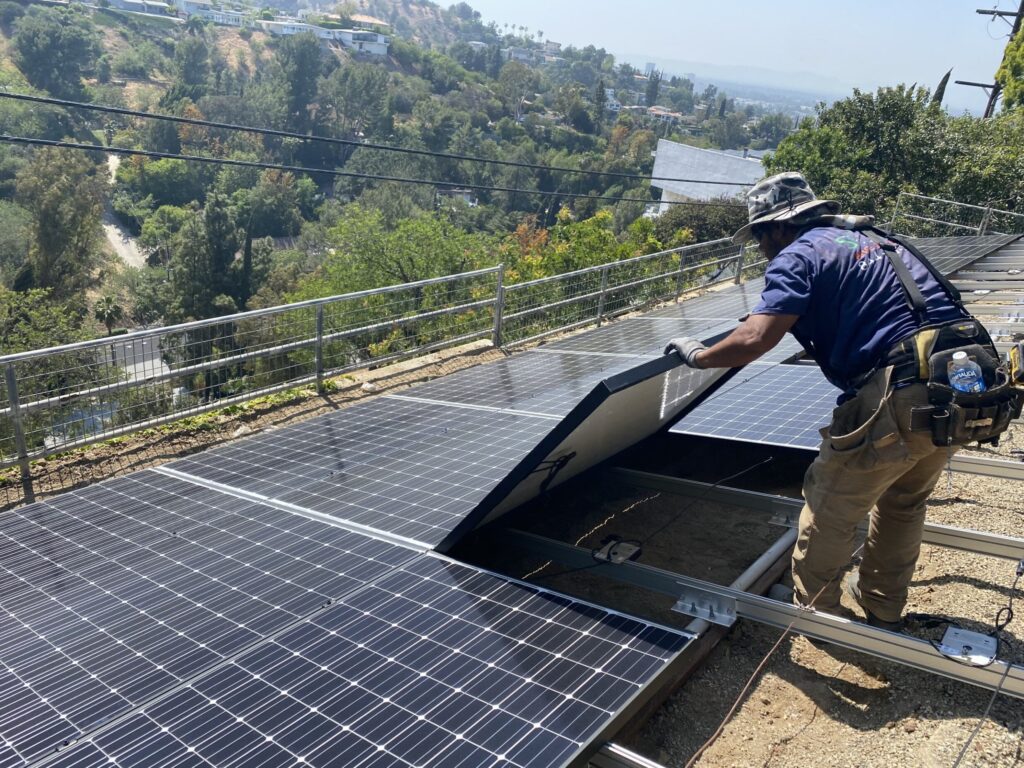
The process of learning how to plan a solar panel removal on a budget is frequently oversimplified in consumer media as a straightforward weekend DIY project involving a socket wrench and a ladder. In professional renewable energy asset management, dismantling a photovoltaic array is a sophisticated engineering task that requires precise electrical de-energization, inventory tracking, and specialized rigging. A common misconception is that unbolting panels from their mounting rails is the most expensive and complex phase of the operation, whereas proper electrical termination and safe lowering logistics actually dictate project safety and labor efficiency.
The primary risk of oversimplifying budget removal strategies is attempting unassisted de-installation to save immediate contractor fees, only to cause micro-cracking in the silicon wafers, sever waterproof roof flashings, or trigger high-voltage direct current arcs. Furthermore, ignoring the logistical costs of palletizing, insured freight transport, and secure interim storage can quickly eliminate any savings achieved through labor shortcuts.
True cost-effective planning demands evaluating the structural and electrical interdependencies of the entire array. By understanding how mounting hardware configurations and regional permitting requirements influence labor timelines, property owners can selectively delegate high-risk electrical tasks while managing physical teardown labor efficiently.
Deep Contextual Background: The Evolution of Solar De-Installation
The historical trajectory of solar asset management has transitioned from permanent, set-and-forget installations toward a highly dynamic lifecycle model. During the early expansion of residential solar markets, systems were designed under the assumption that modules would remain bolted to a single roof surface for twenty-five to thirty years. Consequently, little standardization existed for non-destructive removal, rapid disconnect interfaces, or reusable mounting clamps.
As building stock ages and roof replacement cycles accelerate—often occurring every fifteen to twenty years—the demand for temporary solar detachment has skyrocketed. Concurrently, the proliferation of third-party solar leases and power purchase agreements (PPAs) has created complex legal and contractual frameworks surrounding system removal during home sales or structural insurance claims. Early removal methodologies relied heavily on brute-force contractor labor, resulting in high breakage rates and exorbitant billing structures.
Modern engineering practices have evolved to address these challenges through standardized rail systems, quick-release wire harnesses, and modular connector protocols. Understanding this historical shift allows contemporary planners to adopt streamlined, damage-minimizing detachment procedures that preserve component resale value and safeguard building integrity.
Conceptual Frameworks and Mental Models
Managing a budget-conscious photovoltaic removal project requires structured mental models that synthesize mechanical load paths, financial depreciation, and labor efficiency.
1. The Inverse Installation Sequence Model
This mental model establishes that successful de-installation must strictly follow the reverse order of the original assembly blueprint. Skipping steps—such as disconnecting module home-runs before isolating the inverter or unbolting rails before modules—creates structural imbalances, pinched wiring, and severe mechanical stress on fragile silicon laminates.
2. The Direct-to-Indirect Cost Ratio
This financial framework demonstrates that the sticker price of labor and hardware represents only a fraction of total removal expenses. Indirect costs—including roof leak repairs caused by improper flashing extraction, storage fees, and lost energy generation—frequently eclipse direct removal outlays if planning is flawed.
3. The Risk-Versus-Labor Arbitrage
This model evaluates tasks based on technical hazard versus execution complexity. It dictates where professional intervention is strictly required (such as high-voltage DC isolation and structural waterproofing) versus where owner-managed labor (such as unboxing, labeling, and ground-level pallet staging) can safely reduce project costs.
Key Categories, Variations, and Technical Trade-Offs
When designing a cost-effective strategy focused on how to plan a solar panel removal on a budget, project managers must evaluate several distinct execution models. Each path involves specific trade-offs regarding upfront capital outlay, labor specialization, and risk exposure.
1. Full-Service Turnkey Solar Contractor Removal
Hiring the original installation company or a certified third-party solar O&M provider to handle all electrical shutdown, physical unbolting, transport, and roof restoration.
-
Trade-offs: Maximum safety, warranty preservation, and liability protection; highest direct financial expense.
2. Hybrid Labor Model (Specialized Electrical + Owner-Managed Mechanical)
Hiring a licensed electrician solely for safe DC shutdown and wiring termination, while utilizing general laborers or self-managed effort for physical panel unbolting and stacking.
-
Trade-offs: Significant labor cost savings while eliminating high-voltage electrocution risks; requires meticulous scheduling coordination between trades.
3. Complete DIY Removal with Professional Consulting
Executing all electrical and mechanical removal steps independently after purchasing specialized tools and consulting remote engineering guides.
-
Trade-offs: Lowest possible direct cash outlay; extreme exposure to personal injury, equipment damage, warranty forfeiture, and roof-leak liabilities.
4. Phased Removal During Concurrent Roof Replacement
Timing the solar removal precisely to coincide with a scheduled residential roofing overhaul, bundling contractor mobilization fees to reduce standalone solar service charges.
-
Trade-offs: Optimized contractor overhead and minimized downtime windows; rigid scheduling dependencies where roofing delays halt solar work.
5. Depot-Managed Salvage and Temporary Staging
Dismantling modules and storing them in temporary on-site crates rather than paying commercial warehouse storage fees during extensive home renovations.
-
Trade-offs: Eliminates recurring off-site storage costs; high risk of weather exposure, ground moisture damage, or theft if staging security is inadequate.
6. Value-Engineered Component Reinstallation Planning
Documenting string configurations, serial numbers, and mounting rail positions meticulously during removal to streamline re-installation and avoid costly reconfiguration engineering.
-
Trade-offs: Requires upfront time investment and labeling discipline; prevents expensive wiring errors and testing delays during the subsequent setup phase.
Photovoltaic Removal Strategy Comparison Table
| Removal Strategy | Direct Financial Cost | Labor Complexity | Warranty Risk | Primary Operational Vulnerability |
| Turnkey Contractor | Very High | Low (Delegated) | Minimal | High billing rates and scheduling queues |
| Hybrid Labor Model | Moderate | Moderate | Low – Moderate | Coordination friction between trades |
| Full DIY Execution | Very Low | High | Maximum | Severe electrocution, damage, & leaks |
| Concurrent Roof Bundling | Moderate | Moderate | Low | Inter-contractor schedule dependencies |
| On-Site Crating & Staging | Low – Moderate | Moderate | Moderate | Weather degradation and theft exposure |
| Documented Salvage Prep | Low | Low | Minimal | Upfront administrative discipline required |
Realistic Decision Logic
Determining the optimal execution pathway when evaluating how to plan a solar panel removal on a budget requires a rigorous, multi-step feasibility filter:
-
Step 1: Review existing solar warranty and lease agreements. If active warranties mandate certified contractor removal to prevent forfeiture, eliminate full DIY options immediately.
-
Step 2: Assess internal technical competency and risk tolerance regarding high-voltage direct current handling. If residential DC strings exceed 400 volts, engage a licensed electrician for safe termination.
-
Step 3: Calculate the net financial savings of hybrid labor against potential roof-penetration liabilities. If re-roofing is involved, negotiate a bundled package with the roofing contractor to capture maximum overhead efficiencies.
Detailed Real-World Scenarios
Photovoltaic removal projects manifest across diverse operational contexts. Five detailed scenarios illustrate these financial constraints, decision points, and risk factors.
A : Residential Roof Replacement Under Tight Financial Constraints
-
Context: A homeowner facing mandatory asphalt shingle replacement after twelve years, needing the 8-kilowatt rooftop solar array removed with minimal available cash reserves.
-
Constraints: Strict personal budget limit; active manufacturer power warranty that requires approved handling procedures.
-
Decision Point: Hiring a specialized electrical subcontractor for a one-day shutdown and disconnect, then utilizing general roofing laborers supervised by the homeowner to unbolt and stack modules.
-
Failure Modes: Improperly stacking modules face-to-face without protective corner pads, resulting in glass scratching and micro-cracking across multiple silicon wafers.
-
Second-Order Effects: Successful roof replacement completed on schedule, balanced by minor efficiency losses from unmitigated panel micro-fissures discovered during reinstallation.
B : Commercial Property Sale and Lease Transfer Mandate
-
Context: A commercial building owner required by purchase agreement terms to remove an aging roof-mounted solar array to facilitate structural engineering inspections.
-
Constraints: Tight closing deadlines; strict commercial liability insurance requirements for rooftop work.
-
Decision Point: Contracting an industrial solar O&M firm for a turnkey removal and secure palletized warehousing, absorbing the higher cost to guarantee closing compliance.
-
Failure Modes: Mislabeling DC home-run string circuits during rapid dismantling, leading to extensive polarity mapping delays during subsequent re-commissioning.
-
Second-Order Effects: Seamless property transaction closing, offset by higher-than-expected commercial contractor invoicing fees.
C : Storm-Damaged Racking and Emergency Array Detachment
-
Context: A residential array where severe wind gusts warped mounting rails, requiring urgent removal of modules to prevent structural collapse and electrical shorting.
-
Constraints: Active weather threats; potential insurance claim adjudication pending detailed damage assessment.
-
Decision Point: Engaging emergency electrical contractors to sever power and stabilize live circuits, followed by immediate crane-assisted module lowering.
-
Failure Modes: Rushing the mechanical unbolting phase in high winds, causing a module slip that damages aluminum frame edges and shatters front glass.
-
Second-Order Effects: Successful mitigation of structural collapse risks, with replacement costs offset by property insurance casualty payouts.
D : Phased Home Expansion and Garage Conversion
-
Context: A homeowner planning a major second-story home addition that requires relocating a small south-facing solar array to a newly constructed detached garage roof.
-
Constraints: Extended project timeline; need for temporary storage spanning several months during construction.
-
Decision Point: Executing a hybrid removal where the homeowner carefully unbolts modules and stores them in climate-protected indoor crates, while hiring an electrician for final wiring extensions.
-
Failure Modes: Storing modules unprotected in an active construction zone where drywall dust, moisture, and falling debris contaminate junction boxes and backsheets.
-
Second-Order Effects: Significant upfront cost savings, offset by extensive cleaning labor and terminal oxidation mitigation prior to reinstallation.
E : Corporate Facility Relocation and Asset Salvage
-
Context: A mid-sized commercial enterprise relocating its headquarters, deciding to dismantle its corporate roof solar array to re-install it at the new facility.
-
Constraints: Fixed corporate budget; strict requirement to salvage functional capital assets without purchasing new hardware.
-
Decision Point: Utilizing internal facilities maintenance staff trained under a contracted supervising engineer to systematically label, crate, and transport the array.
-
Failure Modes: Inadequate pallet strapping during long-distance highway transport, causing dynamic vibration damage to module soldered internal busbars.
-
Second-Order Effects: Successful asset relocation achieved under budget, balanced by a 3% yield reduction from transport-induced micro-fractures.
Planning, Cost, and Resource Dynamics
Financial budgeting for photovoltaic removal requires balancing direct out-of-pocket expenses against hidden indirect costs and operational variables. While equipment rental and direct labor represent the most visible line items, secondary expenses frequently determine whether a removal project stays within budget.
Direct costs encompass licensed electrician hourly rates, general removal labor wages, crane or material lift rentals, protective crating materials, and freight transport fees. Indirect costs include municipal permitting fees for structural disconnection, temporary electrical inspection sign-offs, off-site warehousing storage costs, and lost energy generation revenue during downtime.
Opportunity costs also play a critical role. Attempting an unassisted DIY removal to save labor costs can result in personal injury, extended system downtime, or catastrophic roof leaks that cost thousands of dollars to remediate. Consequently, budget planning must account for risk-adjusted contingencies.
Budgetary Cost and Resource Allocations
| Expense Category | DIY / Owner-Managed | Hybrid Labor Model | Full Turnkey Contractor | Primary Cost Drivers |
| Electrical Disconnect Labor | $0 – $300 | $300 – $800 | $1,000 – $2,500 | System size, inverter complexity |
| Physical Removal Labor | $0 (Sweat Equity) | $500 – $1,500 | $2,000 – $5,000 | Roof pitch, array wattage |
| Equipment & Lift Rentals | $150 – $400 | $400 – $1,000 | Included in bid | Crane trucks, scaffolding |
| Crating & Freight Transport | $100 – $300 | $300 – $800 | $1,500 – $4,000 | Distance, pallet count |
| Storage & Warehousing | $0 (On-site) | $100 – $300 / mo | $300 – $800 / mo | Facility duration, climate control |
Tools, Strategies, and Support Systems
Executing a secure and budget-conscious photovoltaic removal requires deploying specific tools and technical support systems designed to protect hardware integrity:
-
CAT III / CAT IV Digital Multimeters: Calibrated voltage meters utilized to verify absolute zero-energy states across DC homeruns before disconnecting module leads.
-
MC4 Disconnect Tools: Specialized non-conductive unlocking wrenches required to separate weather-sealed photovoltaic cable connectors without damaging locking tabs.
-
Foam-lined Transport Pallets and Crates: Custom wooden crating equipped with protective edge bumpers and inter-layer foam padding to prevent glass scratching during transit.
-
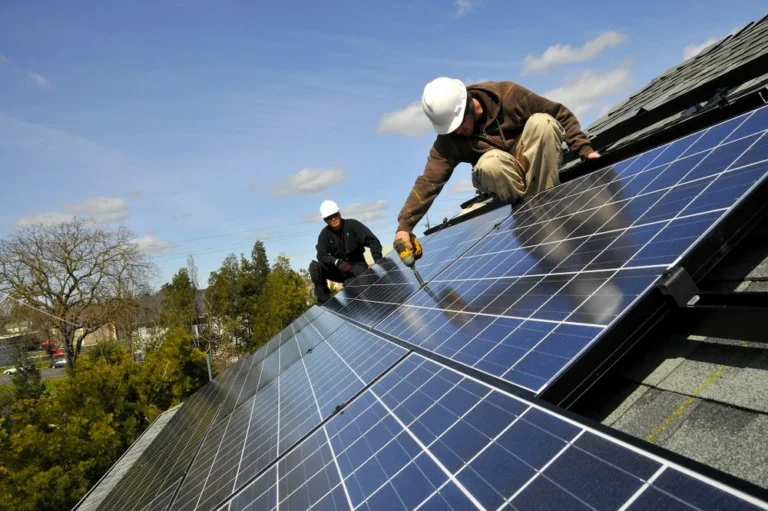
Rooftop Safety Harnesses and Fall Arrest Systems: OSHA-compliant personal fall protection equipment essential for preventing injuries during steep-pitch roof dismantling.
-
Cordless Impact Drivers and Torque Wrenches: Precision fastening tools equipped with correct hex and torx bits to rapidly unbolt aluminum mounting clamps without stripping hardware.
-
Label Printers and Weatherproof Wire Markers: Thermal transfer labeling systems used to code every cable, inverter input, and module serial number to ensure flawless re-installation mapping.
-
Material Hoists and Ladder Lifts: Mechanical incline tracks or portable winches designed to safely lower heavy glass-on-glass solar panels from roof to ground level without manual dropping risks.
Risk Landscape and Failure Modes
Understanding the specific taxonomy of photovoltaic removal failure modes is essential for maintaining safety and preventing costly property damage.
1. High-Voltage Direct Current Arcing
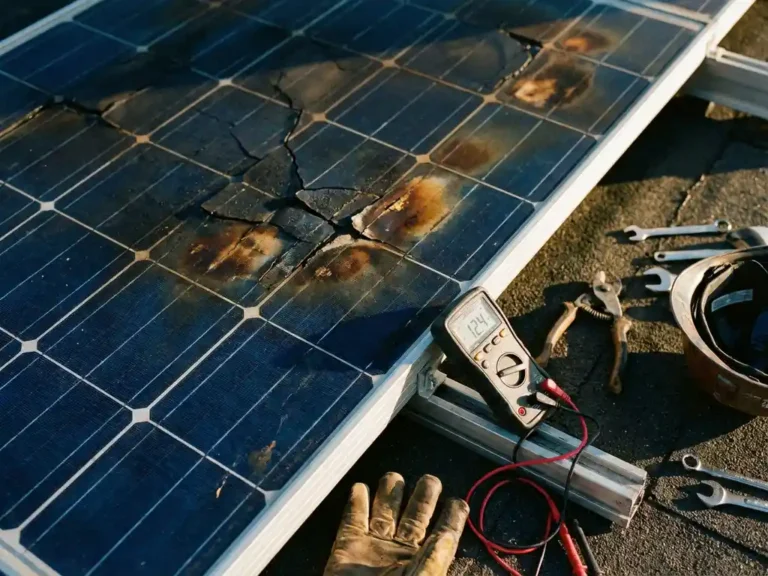
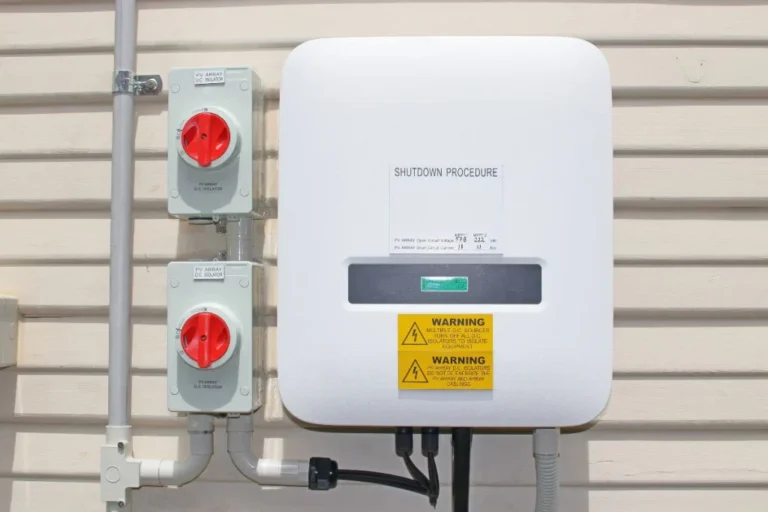
Solar panels continuously generate live DC electricity whenever exposed to ambient light. Unplugging connectors or cutting wires while under load creates an intense, self-sustaining electrical arc that can cause severe shock, arc-flash burns, or structural fires.
2. Structural Micro-Cracking and Glass Shattering
Photovoltaic laminates are engineered to withstand uniform wind and snow loads, but they possess low torsional rigidity. Twisting a module during removal, dropping an edge onto a hard surface, or stacking modules without spacers induces microscopic silicon fractures that permanently degrade power output.
3. Roof Flashing Compromise and Water Ingress
Removing mounting footings often leaves lag bolt penetrations exposed in roof decking. Failing to properly extract, seal, or reflash these penetrations during temporary removal leads directly to severe attic water infiltration and wood rot during subsequent rain events.
Governance, Maintenance, and Long-Term Adaptation
Maintaining asset integrity and structural safety during a removal and eventual re-installation cycle requires a structured governance framework combining meticulous documentation with phased handling protocols.
1. Comprehensive Inventory and Mapping Governance
Before a single bolt is loosened, project managers must establish a digital matrix linking every physical panel serial number to its exact string location on the roof layout. This prevents mismatched electrical configurations during re-installation.
2. Phased Removal and Storage Protocols
Physical handling should adhere to strict operational workflows:
-
Pre-Removal Electrical Isolation: Securing utility grid disconnects and verifying zero-voltage states using calibrated multimeters.
-
Controlled Lowering Procedures: Utilizing mechanical lifts or pulley lines to transfer panels from roof to ground, prohibiting manual vertical dropping.
-
Vertical Staging Storage: Storing uninstalled panels upright on edge in protective racks rather than flat stacks to prevent bowing stress on bottom laminates.
3. Adjustment Triggers and Contingency Checklists
Project planners should establish quantitative thresholds that mandate immediate operational pauses:
-
Trigger 1: Ambient wind speeds exceeding 15 miles per hour during rooftop panel handling.
-
Trigger 2: Discovery of compromised, rusted, or water-logged junction boxes requiring immediate electrical remediation before crating.
-
Trigger 3: Weather forecasts predicting heavy precipitation before roof penetration flashing can be sealed.
Measurement, Tracking, and Evaluation
Evaluating the financial and operational success of a budget solar removal project requires balancing quantitative accounting metrics against qualitative asset preservation indicators.
Quantitative Indicators (Leading vs. Lagging)
-
Leading Indicators: Pre-removal electrical output baselines, hardware inventory count accuracy, and safety gear compliance audits.
-
Lagging Indicators: Total project expenditure variance against the initial budget, number of damaged modules during transit, post-removal roof leak incidents, and re-commissioning power yield recovery ratios.
Qualitative Signals
-
Clarity and legibility of all wire identification tags and string mapping schematics.
-
Pristine physical condition of module frame corners, front glass surfaces, and waterproof junction box seals upon arrival at the storage staging area.
Operational Documentation Examples
To satisfy property insurers, future contractors, and warranty administrators, project teams should maintain a comprehensive removal log containing:
-
Serialized Inventory Manifest: A complete spreadsheet logging every module brand, wattage, serial number, and physical condition grade.
-
String Configuration Schematics: Detailed wiring diagrams mapping exact electrical pathways for future re-installation.
-
Roof Penetration Sealing Log: Photographic documentation verifying that every roof lag bolt hole was properly flashed, sealed, or repaired.
Common Misconceptions and Oversimplifications
-
Misconception 1: Solar panel removal is purely a mechanical task that requires no electrical knowledge or licensing.
-
Correction: Panels carry live DC voltage under daylight, making electrical isolation and safe wiring termination critical prerequisites before any mechanical unbolting can begin.
-
-
Misconception 2: You can stack solar panels flat on top of each other in a large pile without protective spacers.
-
Correction: Flat stacking without inter-layer foam or edge spacers concentrates weight on protruding junction boxes and fragile silicon surfaces, causing widespread glass cracking and cell failure.
-
-
Misconception 3: Renting professional lifting equipment is an unnecessary luxury that can always be replaced by manual ladder carrying.
-
Correction: Manual carrying of heavy glass modules up and down ladders drastically increases drop risks, personal injury hazards, and property damage liabilities.
-
-
Misconception 4: Once solar panels are removed, roof mounting holes can be left unsealed temporarily without risk of water damage.
-
Correction: Even brief exposure to rain without proper flashing or sealant application can lead to severe attic leaks, structural rot, and interior ceiling destruction.
-
-
Misconception 5: Saving money on labor by hiring unlicensed handymen for electrical disconnection is safe if the inverter is turned off.
-
Correction: Turning off the AC inverter does not de-energize rooftop DC homeruns; untrained workers handling live DC circuits face extreme electrocution and arc-flash dangers.
-
-
Misconception 6: Transporting uninstalled solar panels in the bed of a standard pickup truck without crating is completely safe.
-
Correction: Road vibration and shifting cargo without dedicated pallet strapping and edge cushioning will rapidly fracture internal cell busbars and ruin module output.
-
Ethical, Practical, and Contextual Considerations
The practical realities of executing a budget photovoltaic removal highlight broader responsibilities regarding asset longevity and environmental sustainability. As renewable energy installations age, property owners frequently encounter situations where temporary dismantling is unavoidable. Approaching this process with financial prudence should never come at the expense of safety compliance, worker protection, or equipment salvageability.
Practically, balancing aggressive cost-saving targets with professional engineering standards ensures that solar assets can be successfully redeployed rather than prematurely discarded into landfills. Emphasizing methodical planning, structured documentation, and respectful component handling guarantees that clean energy infrastructure remains economically viable and operationally resilient across multiple lifecycles.
Conclusion and Strategic Synthesis
Navigating the logistics of photovoltaic asset dismantling requires a careful balance between financial discipline and technical rigor. Because solar arrays represent significant capital investments that operate under high electrical and mechanical stress, attempting budget removals through uncoordinated shortcuts or skipped safety protocols introduces severe risks to human life, property integrity, and hardware performance.
By implementing structured operational frameworks—such as hybrid labor allocation, rigorous string mapping, mechanical material hoists, and professional electrical isolation—property owners and project managers can successfully master how to plan a solar panel removal on a budget, ensuring absolute safety, cost containment, and long-term asset preservation.