Best Solar Powered Neighborhoods United States: The Guide
The architectural and structural planning of modern residential human settlement has undergone a profound shift. Because of this, best solar powered neighborhoods united states has become a prominent focal point for modern urban planners. Municipal electrical grids face compounding pressures from extreme weather events, aging distribution infrastructure, and escalating peak demand. Therefore, developers, urban planners, and forward-thinking residents are turning their attention toward master-planned neighborhoods centered on renewable generation.
Evaluating the structural viability, engineering models, and long-term asset performance of these developments requires moving far past marketing glossies and promotional catchphrases. This inquiry demands an unvarnished look at how utility-scale photovoltaic arrays, microgrids, battery energy storage systems, and strict building envelopes converge. As a result, they alter the fundamental economics of modern habitation across the nation’s most advanced developments.
Understanding best solar powered neighborhoods united states
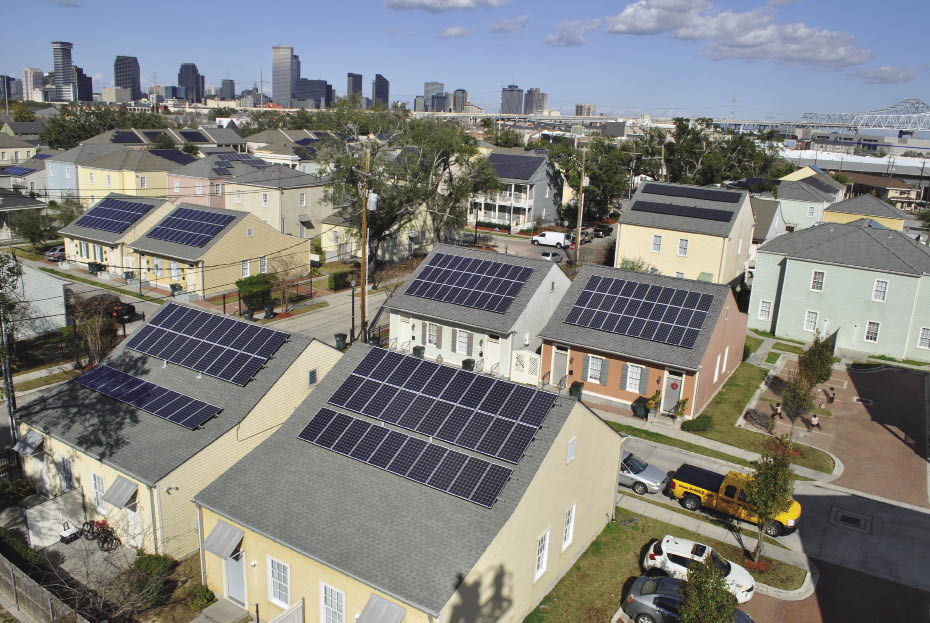
Assessing the criteria that define top-tier renewable residential developments reveals a wide chasm between superficial marketing claims and genuine systemic engineering. The category of best solar powered neighborhoods united states is frequently bandied about by real estate developers. They use it to describe any subdivision where rooftop panels come standard. However, structural integrity, true energy autonomy, and architectural cohesion require a much deeper standard of evaluation.
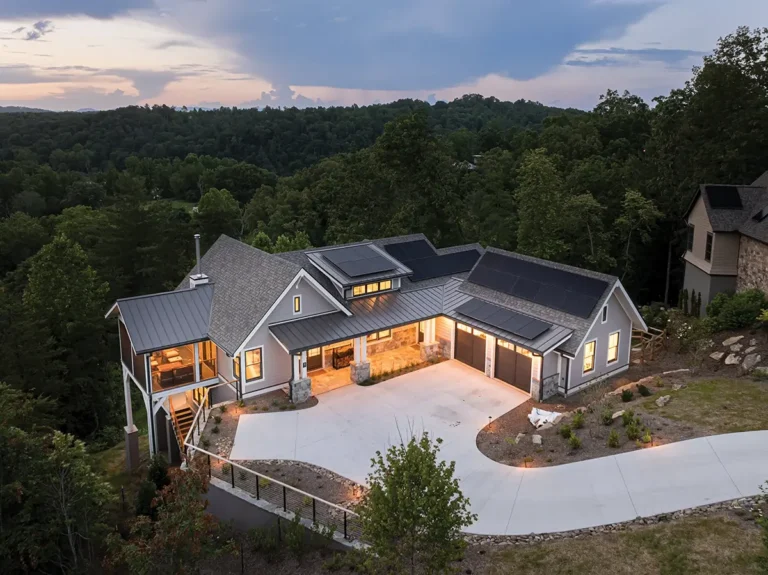
A common misconception is that any neighborhood featuring rooftop photovoltaic panels qualifies as a premier solar community. In reality, standard subdivisions with disparate, homeowner-installed solar arrays operate entirely dependent on traditional net metering policies. True leadership class developments integrate energy generation at the master-planning level. They couple neighborhood-scale solar farms with underground microgrid wiring and centralized battery storage.
Oversimplification risks also plague how buyers and analysts judge these assets. Counting total megawatt generation ignores the critical metric of demand-side efficiency. A community can produce immense solar energy. However, if poorly insulated thermal envelopes waste half that power, the design remains inefficient. The structural reality of elite developments relies on simultaneous optimization: reducing base thermal loads through passive architecture while matching generation capacity directly to consumption profiles.
Deep Contextual Background
The evolution of solar-centric residential planning emerged from decades of trial and error within the green building movement. Early iterations of sustainable housing in the late twentieth century typically manifested as isolated, experimental eco-villages. These pioneering projects prioritized ideological purity over economic scalability. Consequently, they remained inaccessible to the average homebuyer and incompatible with standard municipal zoning models.
By the early 2000s, master-planned community developers began recognizing that environmental resilience could serve as a powerful market differentiator. Early attempts focused primarily on stormwater management and tree preservation. Furthermore, as photovoltaic technology experienced steep cost declines and battery chemistries matured, forward-thinking planners shifted from passive conservation to active generation.
The turning point arrived when utility-scale solar installations could be paired directly with high-density residential land planning. Rather than relying solely on fragmented rooftop arrays, developments began partnering with regional electric utilities. This systemic shift allowed developments to achieve continuous energy redundancy and insulation against grid blackouts.
Conceptual Frameworks and Mental Models
Analyzing how modern renewable developments operate requires structured mental models. These models strip away marketing rhetoric and expose underlying engineering realities.
-
The Generation-to-Storage Ratio Model: This framework evaluates whether a community treats energy as a transient commodity or a managed stock. Top-tier communities pair generation assets with community-scale battery storage to bridge intermittency gaps during evening peak demand.
-
The Thermal Envelope Hierarchy: This model dictates that reducing energy demand through advanced insulation must always precede the deployment of generation hardware. A smaller solar array paired with an airtight envelope outperforms a massive system on a leaky structure.
-
The Microgrid Autonomy Index: This evaluates a community’s capacity to isolate itself from the broader regional grid during systemic blackouts. True resilience means critical infrastructure remains fully operational via localized generation.
-
The Maintenance Liability Matrix: This structural model assesses who bears long-term replacement costs. Developments managed via specialized utility partnerships or professional associations avoid the deferred-maintenance traps common in poorly structured co-ops.
Key Categories or Variations
Master-planned renewable developments across the United States generally fall into distinct structural categories, each defined by unique engineering approaches and trade-offs.
-
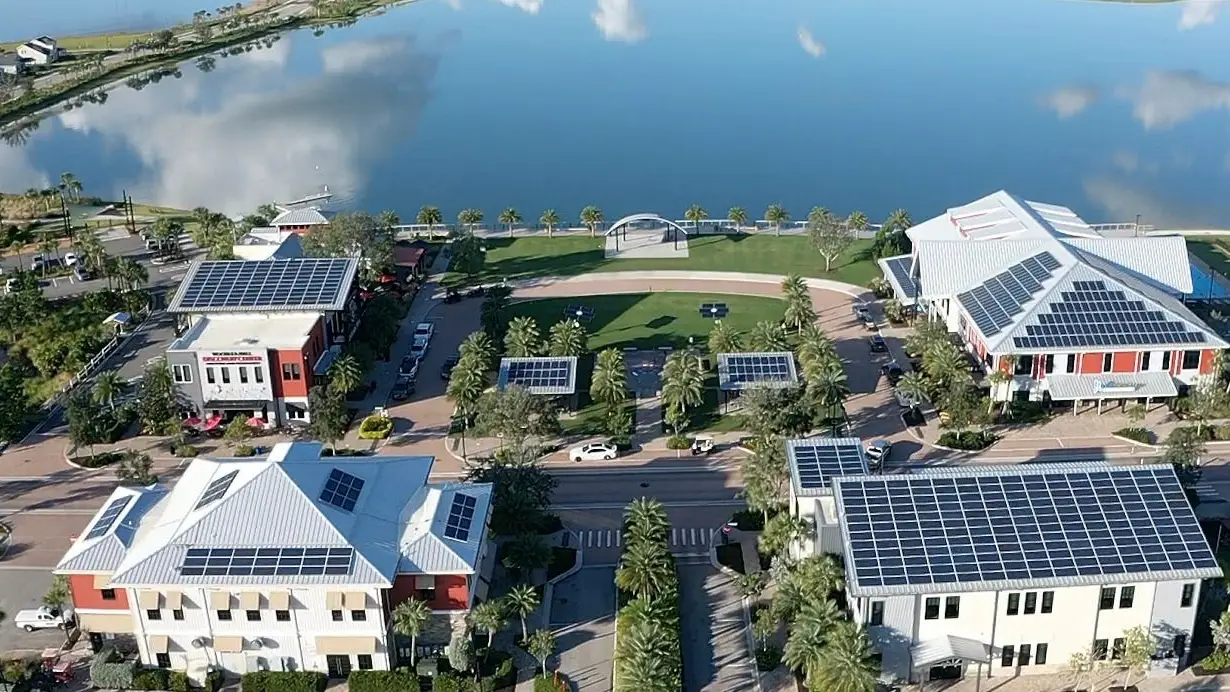
Utility-Integrated Solar Towns: Massive developments built with dedicated utility-scale solar farms providing baseline power via local distribution loops.
-
Microgrid-Enabled Subdivisions: Mid-scale neighborhoods featuring interconnected smart-inverter networks and shared neighborhood battery banks that route power dynamically.
-
Net-Zero Energy Portfolios: Developments where every individual home is mandated to produce as much energy as it consumes annually.
-
Agrihoods with Distributed Renewables: Communities centered around working organic farms that integrate low-impact agrivoltaics to supply clean energy.
-
Intentional Eco-Villages: Grassroots communities focusing on radical self-reliance and collective resource sharing.
-
Retrofit Urban Districts: Existing neighborhoods retrofitted through community choice aggregation programs to achieve collective green power status.
Structural Comparison of Renewable Community Models
| Community Category | Primary Energy Source | Grid Connectivity | Capital Cost Profile | Resilience Index |
| Utility-Integrated Towns | Dedicated Solar Farm + Rooftop | Grid-Tied with Islanding | High Initial Outlay | Extremely High |
| Microgrid Subdivisions | Distributed Rooftop + Shared BESS | Dynamic Microgrid | Moderate-High | High |
| Net-Zero Portfolios | Individual High-Yield Rooftop PV | Net-Metered Grid-Tied | High Acquisition Cost | Moderate |
| Agrivoltaic Agrihoods | Agrivoltaic Arrays + Rooftop PV | Hybrid Grid-Tied | Moderate Expenditure | Moderate-High |
| Intentional Eco-Villages | Decentralized Solar & Wind | Primarily Off-Grid | Variable / Sweat Equity | Maximum |
Choosing among these variations requires balancing upfront capital tolerance against long-term operational predictability. Utility-integrated towns offer seamless living with zero homeowner maintenance burdens. Conversely, net-zero portfolios grant homeowners complete control over their energy systems.
Detailed Real-World Scenarios
To understand how these theoretical frameworks manifest in actual practice, consider several distinct operational scenarios.
Scenario A: Severe Regional Grid Failure
During a major regional hurricane that knocks out transmission lines, a utility-integrated solar town isolates its local distribution loop. Because the community features a centralized solar facility paired with battery storage, the local microgrid transitions to island mode. While surrounding conventional neighborhoods face dark homes, residents maintain uninterrupted power for essential systems. However, a failure mode emerges if domestic energy use is not curtailed. Without behavioral energy rationing, household demand can drain community batteries prematurely.
Scenario B: Extended Winter Overcast in Northern Latitudes
In a net-zero portfolio situated in the Pacific Northwest, winter brings weeks of continuous cloud cover. Homes engineered with high thermal mass maintain comfortable baseline indoor temperatures without excessive heating loads. Nevertheless, short-day solar generation drops below home consumption levels. Consequently, systems must rely on stored battery reserves or draw supplemental power from the regional utility grid.
Scenario C: High-Density Expansion and Shading Disputes
A microgrid subdivision experiences rapid infill development where neighboring multi-story additions cast shadows across adjacent rooftop arrays. This dynamic introduces friction between individual property rights and collective system efficiency. If a homeowner plants fast-growing trees that obstruct a neighbor’s solar collector, the overall microgrid yield calculation shifts, triggering complex dispute resolutions.
Planning, Cost, and Resource Dynamics
The economic architecture of living in top-tier solar communities involves complex interactions between direct capital outlays, hidden maintenance overheads, and regulatory incentives.
Upfront costs in master-planned renewable developments are higher than conventional greenfield construction. Developers must absorb capital expenditures associated with underground microgrid infrastructure, smart meters, and high-performance materials. These costs are typically passed down to the homebuyer through elevated base purchase prices or community development district fees.
However, evaluating these figures purely through initial acquisition cost creates a distorted picture. The opportunity cost of buying a conventional home involves perpetual exposure to utility rate inflation. In contrast, structured solar communities offer predictable operational expenditure baselines.
Financial and Operational Resource Metrics
| Cost & Resource Vector | Conventional Master-Planned Community | Advanced Solar-Powered Community |
| Initial Home Acquisition | Baseline Market Pricing | $+5\%$ to $+15\%$ Premium for Envelope & Tech |
| Monthly Energy Outlay | High Exposure to Utility Rate Hikes | Predictable, Often Net-Negative / Credit Generation |
| Maintenance Burden | Standard HVAC & Roof Upkeep | Specialized Inverter Servicing & BESS Monitoring |
| Insurance Premiums | Standard Regional Property Rates | Potential Reductions Due to Hardened Infrastructure |
| Long-Term Asset Resale | Standard Depreciation Curves | Higher Valuation Retention & Market Demand |
Tools, Strategies, and Support Systems
Maintaining optimal performance across a multi-home solar community requires sophisticated software and hardware support systems.
-
SCADA Platforms: Centralized management dashboards that monitor real-time generation and substation load balancing across the community grid.
-
Smart-Inverter Fleets: Advanced power electronics capable of automatically regulating voltage and frequency fluctuations.
-
Virtual Power Plant Aggregators: Software systems that aggregate individual battery reserves to participate in regional energy markets.
-
Automated Demand Response Controllers: Smart home ecosystems that automatically cycle high-draw appliances during peak pricing windows.
-
Thermographic Drone Audits: Periodic aerial thermal imaging utilized to identify failing insulation or damaged photovoltaic cells.
-
Predictive Maintenance Algorithms: Machine learning models that analyze historical inverter output degradation patterns to dispatch technicians.
-
Home Energy Management Systems: Resident-facing control interfaces that provide granular visibility into energy consumption.
Risk Landscape and Failure Modes
Every complex technical system harbors inherent vulnerabilities. A clear-eyed evaluation of renewable communities requires categorizing compounding risks.
-
Cybersecurity Vulnerabilities: As communities transition to interconnected smart microgrids, they become potential targets for remote digital intrusions.
-
Single-Point Generation Dependency: In communities relying entirely on a single centralized adjacent solar farm, transmission line severance can trigger total community blackout.
-
Battery Degradation Liabilities: Large-scale community battery storage systems degrade over a 10-to-15-year lifecycle, presenting substantial future capital replacement liabilities.
-
Regulatory Policy Shifts: Sudden legislative changes to net-metering tariffs by public utility commissions can abruptly alter community financial payback models.
-
Extreme Weather Physical Damage: Unprecedented hail events or windstorms can inflict physical damage on solar farms and rooftop arrays alike.
Governance, Maintenance, and Long-Term Adaptation
The long-term viability of a solar-powered community depends heavily on institutional governance structures. When initial sales conclude, management typically transitions to a Community Association. Without rigorous maintenance protocols, energy infrastructure degrades rapidly.
Effective governance models incorporate mandatory multi-year asset reserve studies specifically earmarked for renewable infrastructure renewal. These studies account for the inevitable replacement cycle of solar panel micro-inverters and lithium-ion battery banks. Adjustment triggers must be embedded in community bylaws to update energy efficiency standards over time.
Layered Maintenance and Review Checklist
-
[ ] Quarterly: Visual inspection of ground-mount solar arrays and cleaning schedules for debris mitigation.
-
[ ] Semi-Annually: Software firmware audits and security patch updates for smart meters and microgrid controllers.
-
[ ] Annually: Comprehensive thermal imaging scans of residential electrical panels and substation transformers.
-
[ ] Triennially: Reserve fund actuarial review to ensure adequate capital pooling for future BESS replacements.
-
[ ] Decennially: Comprehensive review of microgrid efficiency, load-growth projections, and emerging storage technologies.
Measurement, Tracking, and Evaluation
Assessing whether a renewable community is fulfilling its operational promise requires tracking a careful balance of indicators.
-
Leading Indicators: Metrics that predict future system health, such as inverter conversion efficiency trends and battery round-trip retention rates.
-
Lagging Indicators: Historical performance markers, including annual grid power import totals and net carbon offset calculations.
-
Quantitative Signals: Megawatt-hours generated, kilowatt-hours stored, and peak demand reduction percentages.
-
Qualitative Signals: Resident thermal comfort surveys and the stability of community property value appreciation.
Documentation and Verification Examples
-
Annual Carbon Accounting Reports: Verified carbon offset audits documenting total greenhouse gas emissions avoided through local solar generation.
-
Microgrid Reliability Logs: Detailed operational uptime records tracking islanding performance during grid emergency events.
-
Energy Performance Certificates: Standardized documentation confirming that individual residential units meet strict HERS index targets upon completion.
Common Misconceptions and Oversimplifications
Dissecting the topic of advanced sustainable communities requires dismantling persistent myths that cloud public understanding.
-
Myth 1: Solar communities require absolute isolation from the traditional electrical grid. Correction: The most successful communities maintain robust grid ties while retaining local islanding capabilities for resilience.
-
Myth 2: Renewable infrastructure requires zero ongoing maintenance. Correction: Solar panels, inverters, and battery systems require active monitoring, periodic washing, and eventual capital replacement.
-
Myth 3: Energy efficiency is secondary to solar generation capacity. Correction: Without an optimized thermal envelope, generation assets must be drastically oversized, ruining project economics.
-
Myth 4: All solar communities operate under the same regulatory framework. Correction: Regulatory structures vary wildly by state, dictated heavily by public utility commission rulings.
-
Myth 5: Solar developments are exclusively luxury niche products. Correction: Modern master-planned developments increasingly scale these systems to appeal to middle-market homebuyers.
-
Myth 6: Battery storage systems pose an unmanageable fire hazard. Correction: Modern BESS installations utilize advanced thermal management, non-combustible chemistries, and rigorous safety standards.
Conclusion
The evolution of master-planned renewable developments represents a fundamental maturation in how human settlements interact with energy systems. Designing, constructing, and maintaining developments capable of sustaining high energy autonomy requires deep alignment between architectural physics, electrical engineering, financial prudence, and long-term community governance.