Luxury Net Zero Homes USA: The Definitive Editorial Guide
The contemporary architecture of high-end domestic habitation has shifted, making luxury net zero homes usa a prominent focal point for modern builders. Wealthy homeowners and bespoke builders no longer view sustainability as a rustic compromise. Instead, environmental performance has merged with high-end luxury. High-net-worth buyers now demand immaculate comfort, artistic design, and total energy independence. This convergence has redefined the apex of the residential market.
Building high-performance estates at the upper tier requires balancing conflicting demands. Expansive glass walls, heated pools, and massive square footage typically drive energy use upward. Yet, cutting-edge engineering allows these sprawling properties to produce as much energy as they consume annually. Evaluating this market requires moving beyond marketing brochures. We must examine the actual physics, structural frameworks, and financial realities of these elite properties.
Understanding luxury net zero homes usa
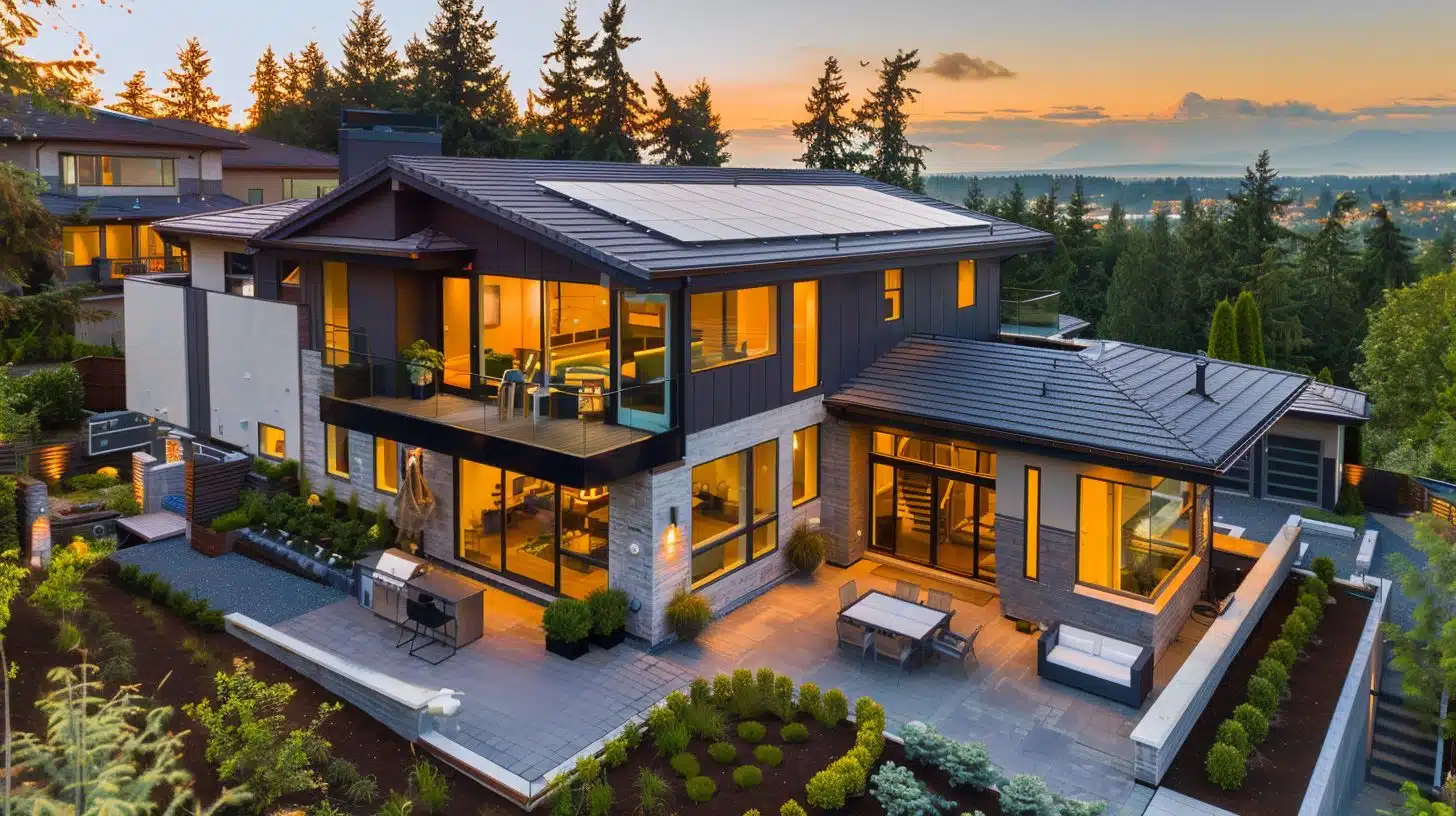
Analyzing the apex of sustainable architecture reveals a wide chasm between real engineering and marketing gloss. The category of luxury net zero homes usa is frequently used to describe any expensive house featuring a few rooftop panels. However, true net-zero performance at an elite scale demands a much deeper standard of evaluation.
A common misconception is that adding enough solar panels can offset any amount of energy waste. In reality, a mansion with poor insulation and massive thermal leaks cannot achieve true net-zero status efficiently. Even if a massive solar array covers the property, the underlying energy waste remains a structural failure. Leadership-class estates rely on simultaneous optimization. They reduce base thermal loads through passive design before ever sizing the generation equipment.
Oversimplification risks also plague how analysts judge these assets. Counting total square footage or checking whether a home boasts geothermal heating ignores the critical metric of load management. The structural reality of the top-tier properties across the country relies on sophisticated automation. These systems balance luxury amenities against real-time renewable generation profiles without sacrificing occupant comfort.
Deep Contextual Background
The evolution of high-end sustainable building emerged from decades of trial and error. Early green homes in the late twentieth century often prioritized ideological austerity. They featured rustic aesthetics that alienated luxury buyers who expected polished finishes and grand proportions. Sustainable building was viewed as an alternative lifestyle choice rather than a hallmark of elite design.
By the early 2000s, pioneering architects began proving that high-performance building science could integrate seamlessly with luxury aesthetics. Advanced framing techniques, triple-pane architectural glass, and hidden renewable systems allowed designers to craft expansive spaces without environmental penalties. The turning point arrived when intelligent building management software matured. Smart automation made it possible to manage complex HVAC loops, hidden battery banks, and solar arrays invisibly.
Today, ultra-prime residential markets view net-zero engineering as a baseline indicator of quality. Buyers at this level demand resilient, self-sustaining compounds that shield them from grid instability. Consequently, luxury real estate developers now treat energy autonomy as an essential luxury amenity alongside private spas and wine cellars.
Conceptual Frameworks and Mental Models
Analyzing elite sustainable properties requires structured mental models. These frameworks strip away marketing rhetoric to expose engineering realities.
-
The Thermal Envelope Hierarchy: This model dictates that reducing energy demand through advanced insulation and high-performance glazing must always precede generation deployment. A smaller solar footprint paired with an airtight envelope outperforms a massive array powering a leaky structure.
-
The Generation-to-Amenity Ratio: This framework evaluates how luxury features—such as heated driveways or infinity pools—impact overall energy baselines. Top-tier estates decouple these high-draw loads through dedicated auxiliary micro-generation.
-
The Aesthetic Discretion Index: This evaluates how well renewable hardware is concealed within high-end architectural designs. True engineering ensures solar tiles, geothermal wells, and ventilation ducts remain entirely invisible to the eye.
-
The Resilience Autonomy Model: This assesses an estate’s capacity to maintain total operational independence during regional grid failures, ensuring uninterrupted comfort for residents.
Key Categories or Variations
High-end sustainable properties fall into distinct structural categories. Each category presents unique engineering approaches and trade-offs.
-
Off-Grid Bespoke Compounds: Massive private estates engineered to operate completely independently from municipal utility infrastructure using dedicated solar fields and battery banks.
-
Grid-Tied Architectural Masterpieces: Ultra-modern homes featuring extensive glass facades that balance high energy loads through massive, highly efficient rooftop arrays and net-metering agreements.
-
Historic Sustainable Retrofits: Century-old grand estates carefully modernized with interior insulation wraps and hidden geothermal systems to achieve net-zero performance without altering exterior facades.
-
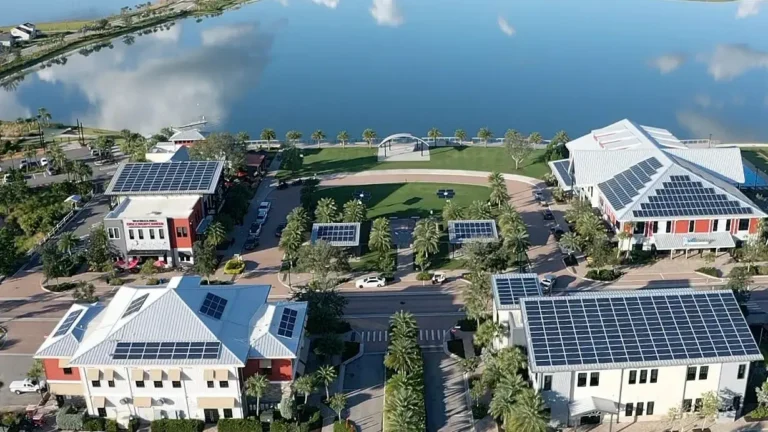
Suburban Luxury Net-Zero Developments: Custom enclaves within master-planned communities where every home meets strict zero-energy standards while sharing neighborhood microgrid benefits.
-
Passive House Certified Estates: Properties built strictly to international Passive House standards, requiring minimal energy for heating and cooling regardless of exterior climate extremes.
-
Coastal Resilient Compounds: Waterfront estates engineered to withstand severe weather events while maintaining zero-energy operations through reinforced solar arrays and elevated battery storage.
Structural Comparison of Luxury Net-Zero Models
| Property Category | Primary Energy Source | Grid Connectivity | Capital Cost Profile | Architectural Integration |
| Off-Grid Compounds | Dedicated Solar + Backup Generators | Completely Isolated | Maximum Capital Outlay | Highly Customized |
| Grid-Tied Masterpieces | BIPV Solar + Geothermal | Bi-directional Grid Tied | Very High | Seamless / Concealed |
| Historic Retrofits | Concealed Rooftop PV + Heat Pumps | Grid-Tied | Extreme (Specialized Labor) | Strict Preservation Focus |
| Enclave Developments | Community Solar + Rooftop Arrays | Microgrid Integrated | High | Uniform Customization |
| Passive House Estates | Optimized Solar Arrays | Hybrid Grid Tied | High Initial Investment | Form Follows Building Science |
Choosing among these variations requires balancing site constraints against aesthetic priorities. Off-grid compounds offer total security from utility failures. However, they require vast land parcels and heavy capital investments in backup storage. Conversely, grid-tied masterpieces leverage local utilities as economic buffers, reducing initial battery storage requirements.
Detailed Real-World Scenarios
To understand how these frameworks manifest in practice, consider several distinct operational scenarios.
Scenario A: Extreme Summer Heatwaves in Desert Estates
During an intense regional heatwave, a luxury desert estate faces extreme cooling loads. Expansive floor-to-ceiling glass windows absorb significant thermal radiation. The estate counters this through automated exterior shading louvers that deploy based on sun angles. Simultaneously, variable-speed geothermal heat pumps manage interior temperatures quietly. The second-order effect is load shifting. Smart management systems pre-cool the massive thermal mass of the home during early morning hours, reducing peak daytime electricity draws.
Scenario B: Extended Winter Storms in Mountain Enclaves
A luxury mountain compound sits isolated during a severe winter blizzard. Heavy snow covers the landscape, blocking regional transmission lines and obscuring solar panels. The estate transitions seamlessly to island mode. Because the property features deep geothermal wells and a multi-kilowatt battery bank housed in a conditioned mechanical room, heating systems remain fully operational. Residents experience zero disruption in comfort while surrounding conventional properties face prolonged outages.
Scenario C: High-Draw Amenity Management
An estate owner hosts a large gathering, activating multiple high-draw amenities simultaneously, including commercial catering appliances, heated outdoor pools, and architectural landscape lighting. This sudden spike threatens to exceed standard inverter capacity limits. The property management software intervenes automatically. It curtails non-essential loads, such as secondary zone climate control, while drawing supplementary power from the on-site battery storage bank without disrupting the event.
Planning, Cost, and Resource Dynamics
The economic architecture of elite sustainable properties involves complex interactions. Direct capital outlays, hidden engineering overheads, and long-term asset valuations all play a crucial role.
Upfront costs for elite zero-energy properties exceed standard luxury construction by a wide margin. Builders must invest in custom triple-pane windows, continuous exterior insulation wraps, precision blower-door testing, and advanced mechanical ventilation systems. These expenses are absorbed willingly by buyers who prioritize long-term asset resilience and predictable operating costs.
However, evaluating these figures through initial acquisition cost alone creates a distorted picture. The opportunity cost of building a conventional mansion involves perpetual exposure to soaring utility rate inflation for immense square footage. In contrast, structured zero-energy estates offer complete operational predictability.
Financial and Operational Resource Metrics
-
Initial Capital Premium: Typically adds $10\%$ to $25\%$ over standard luxury construction costs due to specialized engineering and materials.
-
Monthly Operating Expenses: Frequently approach zero or result in net-credit utility balances depending on regional net-metering tariffs.
-
Asset Resale Valuation: Demonstrates superior market retention and higher demand among sophisticated buyers seeking turnkey efficiency.
-
Maintenance Overhead: Requires specialized annual servicing for ventilation filters, geothermal loops, and battery management systems.
Tools, Strategies, and Support Systems
Maintaining optimal performance across an expansive sustainable estate requires sophisticated software and hardware support systems.
-
BMS (Building Management Systems): Centralized automation platforms monitor real-time indoor air quality, humidity, and energy consumption across multiple estate zones.
-
Geothermal Heat Exchangers: Subsurface loop systems that utilize stable earth temperatures to provide highly efficient heating and cooling.
-
BIPV (Building-Integrated Photovoltaics): Solar technologies disguised as standard roofing materials, slate tiles, or glass facades to preserve aesthetic integrity.
-
Advanced Energy Storage Systems: High-capacity lithium or alternative chemistry battery banks housed in fire-rated commercial-grade enclosures.
-
ERV (Energy Recovery Ventilators): Systems that continuously flush stale indoor air while transferring thermal energy to incoming fresh air streams.
-
Automated Shading Controllers: Motorized exterior louvers linked to weather stations to block unwanted solar heat gain dynamically.
-
Predictive Load Management Software: Algorithms that analyze weather forecasts and historical usage patterns to optimize battery charging cycles.
Risk Landscape and Failure Modes
Every complex technical system harbors inherent vulnerabilities. A clear-eyed evaluation requires categorizing compounding risks that can undermine property performance.
-
Complex Integration Failures: Because multiple high-tech subsystems must communicate seamlessly, a single software glitch in the automation hub can cascade and disrupt climate control.
-
Specialized Maintenance Dependency: Remote estate locations make it difficult to source certified technicians capable of servicing proprietary geothermal or inverter hardware.
-
Premature Battery Degradation: Intensive cycling driven by luxury amenities can accelerate the wear on energy storage systems if thermal management fails.
-
Aesthetic Compromise Conflicts: Strict architectural review boards may clash with functional placement requirements for external solar or ventilation assets.
-
Extreme Weather Envelope Breaches: High-velocity windstorms or heavy hail can damage specialized architectural glass or flush-mounted solar tiles, resulting in costly replacements.
Governance, Maintenance, and Long-Term Adaptation
The long-term viability of a luxury sustainable estate depends heavily on rigorous maintenance protocols. Unlike standard homes, these properties function more like commercial micro-infrastructure.
Effective estate management incorporates multi-year asset reserve schedules. These schedules account for the inevitable replacement cycle of inverter electronics, ventilation motors, and battery storage banks. Furthermore, property managers must conduct periodic blower-door tests to ensure the building envelope has not settled or developed air leaks over time.
Layered Maintenance and Review Checklist
-
[ ] Quarterly: Replacement of high-grade MERV air filters within energy recovery ventilators.
-
[ ] Semi-Annually: Firmware updates and security audits for centralized building management software.
-
[ ] Annually: Comprehensive thermal imaging scans of exterior walls and electrical distribution panels.
-
[ ] Triennially: Professional flushing and pressure testing of closed-loop geothermal systems.
-
[ ] Decennially: Comprehensive actuarial review for impending battery bank and inverter replacements.
Measurement, Tracking, and Evaluation
Assessing whether an elite sustainable estate fulfills its promise requires tracking a careful balance of indicators.
-
Leading Indicators: Metrics that predict future system health, such as heat pump efficiency ratios and battery round-trip retention rates.
-
Lagging Indicators: Historical performance markers, including annual net energy import totals and carbon offset verifications.
-
Quantitative Signals: Kilowatt-hours generated, thermal loss coefficients, and peak demand reduction percentages.
-
Qualitative Signals: Indoor air quality stability, acoustic comfort levels, and overall occupant thermal satisfaction.
Documentation and Verification Examples
-
Passive House Certification Audits: Rigorous third-party verification confirming strict heating and cooling demand limits.
-
Blower-Door Test Reports: Quantitative documentation proving airtightness benchmarks below standard building code requirements.
-
Net-Zero Energy Statements: Annual utility accounting logs demonstrating zero net grid consumption over a rolling twelve-month period.
Common Misconceptions and Oversimplifications
Dissecting the topic of elite sustainable architecture requires dismantling persistent myths.
-
Myth 1: Luxury net-zero homes usa must look rustic or utilitarian. Correction: Modern engineering allows zero-energy performance to integrate seamlessly with ultra-luxurious, contemporary glass-and-steel architecture.
-
Myth 2: Solar panels alone make a luxury estate net-zero. Correction: Without an airtight thermal envelope and high-efficiency mechanical systems, generation assets cannot overcome structural energy waste.
-
Myth 3: Geothermal systems work everywhere without site constraints. Correction: Subsurface geology, lot size, and water table depths dictate the feasibility and design of geothermal loops.
-
Myth 4: Zero-energy homes require constant lifestyle sacrifices. Correction: Advanced automation ensures residents experience absolute comfort without manually managing energy consumption.
-
Myth 5: Maintenance requirements are identical to conventional mansions. Correction: Sustainable estates require specialized technical oversight for renewable generation and ventilation hardware.
-
Myth 6: Battery storage poses an unmanageable safety risk. Correction: Modern high-end installations utilize advanced thermal management and non-combustible chemistries housed in secure utility rooms.
Conclusion
The rise of elite sustainable residential design represents a profound maturation in modern architecture. Constructing properties that combine sprawling luxury with total energy autonomy requires deep alignment between architectural physics, advanced engineering, and meticulous financial planning.
To learn more about broader renewable infrastructure trends, you can explore resources on sustainable building principles. Furthermore, analyzing how these properties integrate into regional power grids offers additional insights into modern energy management.