Compare Rooftop Solar Systems: In-Depth Technical & Financial Guide
The architecture of modern residential energy procurement has shifted fundamentally over the past two decades. As centralized grids face unprecedented stress from electrification, extreme weather, and aging infrastructure, energy consumers increasingly look toward decentralized generation. At the center of this transition sits photovoltaic technology mounted directly on building envelopes. Evaluating these installations requires a departure from simple appliance-shopping mentalities. Furthermore, it demands a rigorous examination of engineering integration, electrical load profiles, financial amortization, and structural longevity.
When individuals or organizations set out to compare rooftop solar systems, they frequently encounter a landscape saturated with marketing terminology. Moreover, they face superficial metrics like payback periods and oversimplified hardware ratings. Yet, a genuine evaluation goes far beyond calculating how many panels fit on a given square footage. It involves understanding how solar generation interacts with variable consumption patterns, local utility rate structures, regional microclimates, and long-term degradation physics.
This comprehensive analysis moves past surface-level green narratives to examine the structural realities of rooftop solar. By exploring technical frameworks, varied hardware typologies, financial friction points, and operational failure modes, this resource offers a blueprint for navigating decentralized energy deployment with intellectual rigor and technical clarity.
Understanding “compare rooftop solar systems”
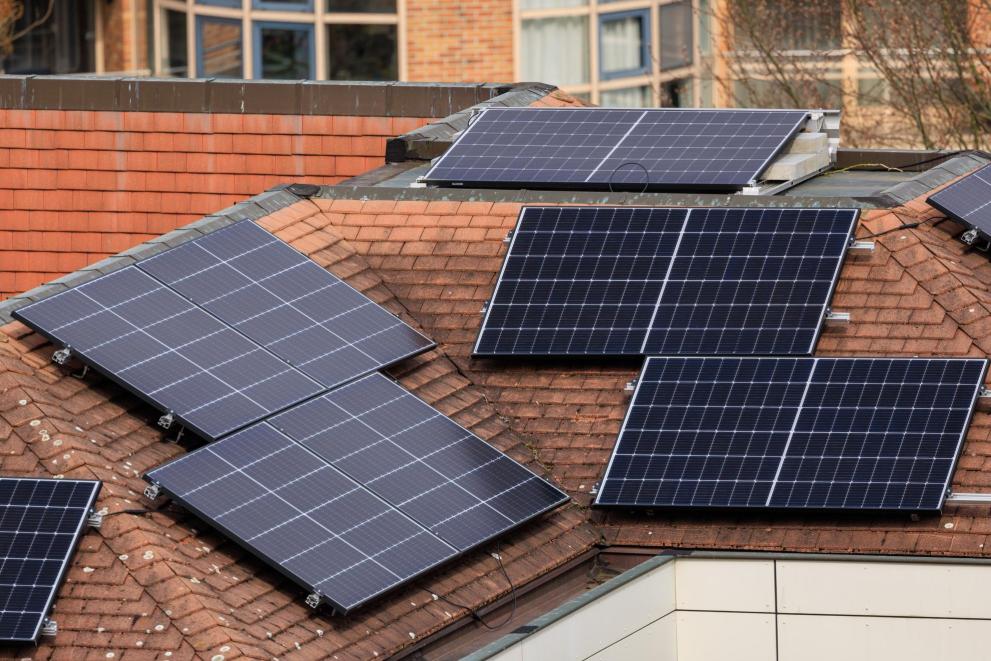
The phrase compare rooftop solar systems points to an analytical process rather than a singular purchasing choice. At its core, this phrase encapsulates the multi-variable assessment required to match specific generation assets with distinct physical, economic, and operational environments. However, approaching this comparison through a purely transactional lens invites significant operational risk.
A common misunderstanding in the broader market is the assumption that rooftop solar installations are modular plug-and-play appliances. Consequently, consumers often treat panels and inverters like home audio equipment. They assume that higher price tags automatically translate to superior performance in every environment. This perspective ignores the systemic nature of photovoltaic deployment. In reality, a high-efficiency monocrystalline panel paired with an incompatible inverter can drastically underperform.
Oversimilar oversimplification risks also manifest in how performance is measured. Relying solely on nameplate capacity, often expressed in kilowatts-peak, obscures the reality of real-world energy yield. Factors such as temperature coefficients, spectral response, and balance-of-system electrical losses mean that identical nameplate ratings yield different energy volumes. To evaluate these assets accurately, stakeholders must examine the entire ecosystem of generation, conversion, storage, and interconnection rather than isolated component specifications.
Deep Contextual Background
The evolution of rooftop solar infrastructure is rooted in the convergence of semiconductor physics, power electronics, and shifting utility market regulations. Historically, photovoltaic installations were niche, off-grid applications reserved for remote cabins or telecommunications towers. These early systems relied on thick, multicrystalline silicon wafers, primitive charge controllers, and centralized string inverters.
As global manufacturing capacity scaled, module costs dropped precipitously. This commoditization of hardware shifted the primary bottleneck of solar adoption from capital expenditure to soft costs, such as permitting and grid interconnection labor. Concurrently, power electronics evolved dramatically. The introduction of microinverters transformed panels from series-wired choke points into independent generation nodes, which dramatically improved safety and yield under partial shading.
Meanwhile, the regulatory environment transitioned from net metering frameworks to increasingly complex net billing tariffs. This regulatory shift altered the economic equation entirely. Systems are no longer designed merely to maximize annual kilowatt-hours produced. Instead, they are engineered to strategically offset high-tariff consumption hours or coordinate seamlessly behind-the-meter with electrochemical storage.
Conceptual Frameworks and Mental Models
Navigating the complexities of distributed generation requires mental models that account for systemic interactions rather than linear inputs and outputs.
1. The Energy-Load Synchronicity Model
This framework posits that the true value of a rooftop solar installation is dictated by the degree of overlap between generation curves and consumption curves. Producing high volumes of energy during midday hours holds diminishing economic value if the building is vacant. Maximizing value requires either shifting load-heavy activities to daylight hours or deploying localized storage to capture midday surplus.
2. The Bottleneck Theory of System Efficiency
Borrowing from the principles of constraints, this model asserts that a solar array’s overall performance is bounded by its weakest systemic link. Whether that bottleneck is thermal throttling on high-temperature afternoons or string mismatch caused by uneven degradation, optimizing the system requires identifying this limiting factor. Therefore, fixing the primary constraint yields better results than over-investing in superior components elsewhere.
3. The Lifecycle Cost-to-Degradation Ratio
Instead of evaluating investments based on initial capital outlay, this model maps projected degradation curves against expected operation and maintenance interventions. It treats the system not as a static purchase, but as a depreciating industrial asset. Consequently, it requires periodic inverter replacement and thermal health checks to maintain baseline output over a multi-decade horizon.
4. The Resilience vs. Economic Optimization Dichotomy
This framework addresses the inherent tension between maximizing financial return and maintaining operational independence. Systems optimized purely for lowest-cost grid offset often lack islanding capabilities during grid outages. Conversely, systems engineered for total resilience through deep storage carry a significant financial premium that alters traditional payback calculations.
Key Categories or Variations
Rooftop solar configurations can be categorized across several architectural and electrical dimensions. Understanding these variations helps stakeholders align technical specifications with site realities.
-
String Inverter Systems: Traditional architecture where multiple panels are wired in series to a single central inverter. It is cost-effective, but vulnerable to performance drops if a single panel is shaded.
-
Microinverter Systems: Decentralized power conversion where each panel is paired with an individual microinverter. This maximizes yield under complex shading, though at a higher initial hardware cost.
-
Optimized String Systems: A hybrid approach using string inverters paired with DC optimizers attached to individual panels. It balances voltage management with centralized processing durability.
-
Ballasted Flat-Roof Systems: Designed for commercial low-slope roofs where structural penetration must be avoided. It utilizes concrete weights to resist wind uplift forces.
-
Attached Pitched-Roof Systems: Standard residential configuration utilizing rail-based mounting hardware anchored directly into roof rafters.
-
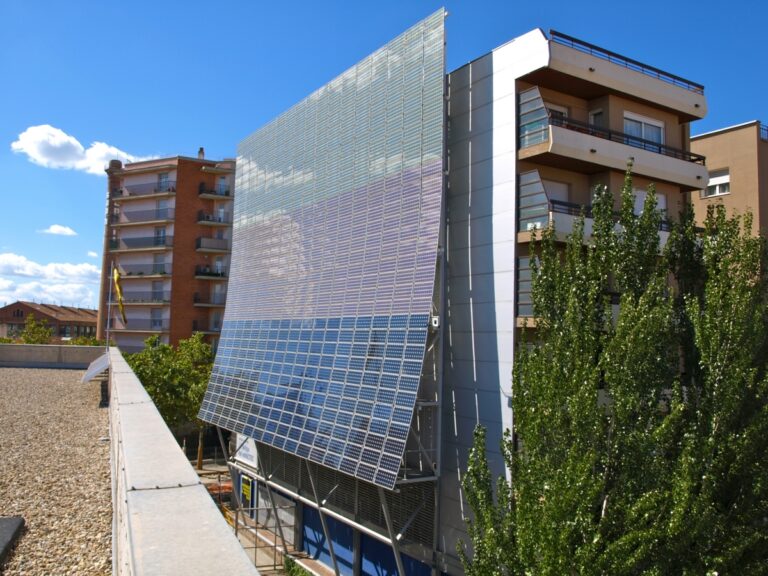
Building-Integrated Photovoltaics (BIPV): Solar materials designed to serve as the actual building skin, replacing conventional roofing tiles or facade glass.
-
AC-Coupled Storage-Integrated Systems: Retrofit-friendly configurations where a battery storage system maintains its own inverter and ties into an existing installation.
-
DC-Coupled Hybrid Systems: Integrated configurations where solar generation and battery storage share a common charge controller, minimizing conversion losses.
Comparative Overview of Core System Typologies
| Typology | Primary Advantage | Primary Disadvantage | Optimal Deployment Environment |
| String Inverter | Lowest upfront hardware cost; fewer individual components | Single point of failure; poor performance under partial shading | Unshaded, un-obstructed roofs with uniform pitch |
| Microinverter | Maximum panel-level resilience and granular data monitoring | Higher initial hardware density; roof-mounted electronics exposure | Complex roof geometries or partial shading |
| Optimized String | Balances cost and performance; manages shading efficiently | Additional electronic components on every panel | Large residential or light commercial roofs |
| BIPV Systems | Superior architectural aesthetics and dual-function material | Lower thermal and electrical efficiency; premium capital cost | Historic districts, high-end architectural builds |
Realistic Decision Logic
Selecting among these categories requires a methodical screening process. If a site experiences zero shading and tight budgets, string inverters represent an efficient economic choice. Conversely, if the roof features multiple intersecting planes, the marginal cost of microinverters or DC optimizers is justified. For facilities requiring business continuity, integrating hybrid inverters with scalable battery storage becomes non-negotiable.
Detailed Real-World Scenarios
To understand how these systems perform in practice, examine the following operational scenarios, complete with physical constraints and failure modes.
A : The Commercial Warehouse with Metal Deck Roofing
-
Context: A large logistics warehouse located in a high-wind inland region.
-
Constraints: Structural weight limits on the steel bar joist roof; desire to offset high daytime cooling loads.
-
Decision Points: Selecting a non-penetrating ballasted mounting system versus mechanically fastened standing-seam clamps.
-
Failure Modes: Inadequate ballast calculation leading to wind-induced uplift during severe storms; thermal expansion mismatches tearing membranes.
-
Second-Order Effects: Successful deployment reduces daytime peak demand charges, altering the facility’s utility tariff classification.
B : The Shaded Suburban Residential Roof
-
Context: A residential property surrounded by mature deciduous trees causing dynamic shading across a south-facing roof.
-
Constraints: Limited roof surface area forcing panel placement in suboptimal zones.
-
Decision Points: Choosing between a cost-effective string inverter or a microinverter architecture.
-
Failure Modes: String mismatch causing the weakest panel to drag down the entire array’s voltage.
-
Second-Order Effects: The homeowner must balance seasonal tree pruning costs against unmitigated generation losses.
C : The High-Latitude Remote Agricultural Facility
-
Context: An agricultural processing plant located in a region with heavy winter snow loads.
-
Constraints: High seasonal tilt angle requirements to shed snow; remote location vulnerable to grid outages.
-
Decision Points: Incorporating high-capacity battery storage and configuring a steep array tilt.
-
Failure Modes: Snow sliding off upper rows accumulating on lower rows, creating extended shading barriers.
-
Second-Order Effects: Energy independence during harvest season prevents catastrophic processing downtime.
D : The Urban Multi-Tenant Commercial Building
-
Context: A multi-story office building burdened by HVAC chillers and ventilation shafts.
-
Constraints: Fragmented roof geography; complex split-tenant electrical metering.
-
Decision Points: Utilizing high-efficiency panels to maximize energy density; implementing sub-metering for solar credits.
-
Failure Modes: HVAC exhaust plumes causing thermal degradation and rapid soiling on adjacent panels.
-
Second-Order Effects: Enhances building marketability for corporate tenants bound by strict ESG reporting mandates.
Planning, Cost, and Resource Dynamics
Evaluating the financial dimensions of a rooftop solar deployment requires analyzing both direct expenditures and hidden opportunity costs.
Direct costs include hardware procurement, engineering design, permitting fees, labor installation, and interconnection studies. Indirect costs, however, frequently dictate project viability. These include administrative overhead, customer acquisition expenses, insurance premiums, and potential roof remediation work. Installing solar on an aging roof introduces a massive secondary labor cost later: the complete uninstallation of the array to accommodate roof repairs.
Opportunity costs also play a critical role. Capital allocated to an upfront solar purchase cannot be deployed toward core business expansion. Conversely, relying on third-party financing models eliminates upfront capital hurdles, but it often captures a significant portion of the long-term financial upside.
Cost Range and Variable Breakdown
| Cost Category | Typical Percentage Share | Primary Cost Drivers | Variability Factors |
| Hardware (Modules & Inverters) | 35% – 45% | Cell technology tier, power conversion architecture | Global supply chain shifts, tariff policies |
| Soft Costs (Permits, Design) | 25% – 35% | Local authority friction, customer acquisition | Municipal bureaucracy, regional labor markets |
| Labor & Installation | 15% – 25% | Roof complexity, labor availability | Tile vs. asphalt shingle, commercial flat roof ballasting |
| Balance of System | 10% – 15% | Electrical run lengths, switchgear upgrades | Distance to main service panel, code requirements |
Tools, Strategies, and Support Systems
Deploying and maintaining modern rooftop solar infrastructure relies on a sophisticated ecosystem of software and diagnostic instruments.
-
Solar Design Software: Advanced modeling tools that use LIDAR data to simulate shading, horizon obstructions, and annual energy yields.
-
Module-Level Monitoring Portals: Cloud-based telemetry platforms that track real-time generation and voltage stability down to the individual panel.
-
Thermal Imaging Cameras: Diagnostic tools used during maintenance to detect invisible micro-cracks and resistive electrical hotspots.
-
Insulation Detectors: Specialized electrical testing equipment used to verify the integrity of DC wiring insulation.
-
Utility Interconnection Portals: Digital submission workflows required by distribution companies to process application reviews.
-
Energy Management Systems (EMS): Software controls that coordinate solar generation and building HVAC loads to minimize peak demand charges.
-
Structural Calculators: Software used by structural engineers to verify that roof trusses can safely bear dead loads and wind uplift.
-
Regulatory Compliance Trackers: Databases monitoring evolving local building codes and rapid shutdown mandates.
Risk Landscape and Failure Modes
Every industrial and residential installation operates within a matrix of physical and operational risks. Compounding failures often stem from minor oversights during initial deployment.
The primary risk vector is electrical arc faults. Direct current systems operate at high voltages that can sustain dangerous arcs if insulation degrades or connectors loosen. Without rapid shutdown devices, these arcs can ignite roofing materials.
A secondary risk category involves mechanical stress and environmental degradation. Wind shear exerting pressure on poorly anchored brackets can create lifting moments that compromise roof integrity. Furthermore, thermal cycling causes micro-cracking in silicon wafers. While invisible initially, these micro-cracks expand over time, creating resistance hotspots that permanently degrade capacity.
Operationally, component obsolescence poses a long-term threat. Inverters carry shorter operational lifespans than photovoltaic panels, typically requiring major servicing within 10 to 15 years. If a manufacturer goes out of business, sourcing compatible replacement units can trigger expensive redesigns.
Governance, Maintenance, and Long-Term Adaptation
Protecting the long-term yield of a rooftop solar investment requires structured governance and disciplined operational oversight. A passive approach—assuming the system will run autonomously for decades—frequently results in unmitigated performance drift.
Maintenance protocols must be formalized into routine inspection schedules. Visual checks should verify that conduit supports remain secure and vegetation has not encroached into the solar window. In dusty environments, automated washing cycles are mandatory to prevent soiling losses.
Long-Term Operational Checklist
-
Quarterly Telemetry Audit: Review platform-reported generation data against weather models to detect unexplained yield drops.
-
Semi-Annual Visual Inspection: Check for physical damage to racking, exposed wiring, and pest intrusion beneath panel arrays.
-
Annual Thermal Scans: Utilize infrared thermography during peak generation hours to identify resistive hot spots.
-
Triennial Electrical Testing: Perform insulation resistance testing and verify proper operation of rapid shutdown equipment.
-
Decennial Inverter Service Review: Evaluate inverter performance health and plan capital reserves for mid-lifecycle replacement.
Measurement, Tracking, and Evaluation
Assessing the ongoing health and efficacy of a solar installation requires distinguishing between leading and lagging indicators.
Leading indicators provide early warning of developing system faults before failure occurs. These include subtle increases in string voltage variance or minor communication dropouts. Tracking these metrics allows facility managers to dispatch service technicians proactively.
Lagging indicators measure historical results. The primary lagging metric is specific yield, expressed as kilowatt-hours generated per kilowatt of installed capacity over a rolling 12-month period. Comparing this figure against baseline models isolates system degradation from weather anomalies.
Documentation and Verification Examples
-
Commissioning Test Report: A baseline document recording open-circuit voltages and insulation resistance measurements taken after installation.
-
Performance Ratio Ledger: A monthly tracking log comparing actual energy delivered against theoretical energy calculated from irradiance sensors.
-
Warranty Registry: A centralized audit trail tracking serial numbers, firmware versions, and service history for every component.
Common Misconceptions and Oversimplifications
The widespread adoption of rooftop solar has given rise to persistent myths that distort realistic expectations.
-
Myth 1: Solar panels do not produce power on cloudy days.
-
Correction: While generation drops under heavy cloud cover, diffuse sunlight still stimulates photovoltaic cells, allowing systems to produce between 10 percent and 25 percent of capacity.
-
-
Myth 2: Rooftop solar systems eliminate electricity bills entirely.
-
Correction: Unless a system is entirely off-grid with massive storage, most grid-tied users still pay monthly utility connection fees and net billing charges.
-
-
Myth 3: Solar installations require zero maintenance.
-
Correction: Inverters require servicing, wiring degrades under UV exposure, and environmental soiling requires periodic cleaning.
-
-
Myth 4: Any roof can support a solar array without reinforcement.
-
Correction: Adding dead loads and ballast weight often requires professional structural engineering assessments and framing reinforcement.
-
-
Myth 5: All solar panels degrade at the same rate.
-
Correction: Degradation rates vary by tier; premium monocrystalline panels lose 0.3 percent to 0.5 percent annually, whereas lower tiers degrade faster.
-
-
Myth 6: Solar systems increase roof vulnerability to leaks.
-
Correction: Properly engineered installations utilizing professional flashing actually protect the underlying roof membrane from UV degradation.
-
-
Myth 7: Net metering policies are permanent.
-
Correction: Utility regulatory frameworks are volatile, and jurisdictions are systematically transitioning toward lower export compensation rates.
-
Ethical, Practical, or Contextual Considerations
Beyond financial and technical metrics, distributed solar installations intersect with broader societal considerations. The lifecycle footprint of photovoltaic manufacturing involves the extraction of critical minerals and energy-intensive wafer production. Ensuring that supply chains adhere to ethical labor standards is a growing institutional imperative.
Additionally, local electrical grid saturation presents a practical boundary. In regions with exceptionally high solar penetration, midday generation spikes can create localized voltage rises. Navigating these regional bottlenecks requires collaborative grid-interactive strategies rather than isolated expansion.
Conclusion
Evaluating and deploying rooftop solar infrastructure is a multi-dimensional engineering and financial undertaking. By moving past superficial marketing claims and embracing structural rigor, stakeholders can design systems that withstand environmental stress and deliver predictable long-term value. True mastery of this domain requires continuous monitoring, intellectual honesty, and a refusal to treat complex energy assets as simple consumer goods.