Best Solar Roofing for Eco Friendly Properties: Sustainable Guide
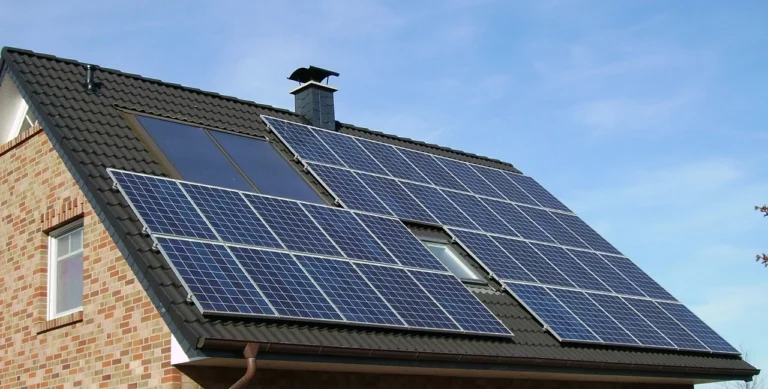
Finding the best solar roofing for eco friendly properties requires a careful balance between advanced architectural engineering and environmental stewardship. As the global building sector faces tightening environmental standards, traditional building materials are undergoing a fundamental re-evaluation. Minimizing a property’s ecological impact no longer stops at insulation; it requires active, decentralized energy capture embedded directly into the building envelope.
Identifying the best solar roofing for eco friendly properties demands a radical departure from superficial green marketing. Property owners and developers must evaluate structural lifecycle metrics, embodied carbon values, material recyclability, and energy conversion efficiencies simultaneously. Furthermore, a truly sustainable roofing asset must balance the environmental cost of its raw material extraction and manufacturing against its multi-decade operational yield.
This analysis provides an exhaustive, engineering-grade blueprint for assessing and selecting photovoltaic solutions designed for sustainable real estate. By exploring technical frameworks, material typologies, and long-term governance models, this resource establishes a rigorous foundation for sustainable energy procurement.
Understanding “best solar roofing for eco friendly properties”
The phrase best solar roofing for eco friendly properties points to an optimized synthesis between environmental asset conservation and high-efficiency renewable energy generation. At its core, this phrase encapsulates the complex balance required to match low-impact, durable building materials with active photovoltaic harvesting technologies. However, approaching this selection process through a generic consumer lens invites significant structural and ecological risk.
A common misunderstanding in the broader green building market is the assumption that any solar installation automatically qualifies a property as eco-friendly. Consequently, consumers often overlook the embodied carbon footprint behind heavy solar panels, or ignore the fact that bolting hardware onto a short-lived roof creates premature waste. True sustainability requires a holistic accounting of the entire material lifecycle, ensuring that the solar asset and the protective roof deck share a synchronized operational lifespan.
Oversimplification risks also manifest in how environmental value is quantified. Relying solely on a product’s recyclability rating or its initial carbon offset projection obscures the realities of regional climate stressors. To evaluate these systems accurately, stakeholders must examine how material composition, structural load capacity, and energy performance interact across a multi-decade operational horizon.
Deep Contextual Background
The historical trajectory of eco-friendly construction materials evolved separately from the solar power industry for decades. Sustainable architecture historically prioritized passive design principles, local sourcing, and long-lasting mineral envelopes. Meanwhile, the solar sector focused almost exclusively on silicon purity and large-scale rack-mounted utility arrays, treating the underlying roof merely as an arbitrary mounting platform.
As environmental regulations tightened and urban densification accelerated, building scientists recognized the inefficiencies of treating energy generation as an afterthought. This realization spurred the development of building-integrated photovoltaics and high-performance metallic substrates capable of dual functions. Concurrently, manufacturing techniques advanced to reduce the energy payback time of silicon wafers and incorporate post-consumer recycled content into structural mounting elements.
This convergence gave rise to modern eco-centric solar roofing classes. Today’s sustainable building standards demand that roofing materials actively reduce operational emissions while maintaining high circularity and recyclability at the end of their service lives.
Conceptual Frameworks and Mental Models
Navigating the complexities of sustainable photovoltaic roofing requires robust mental models that account for multi-variable environmental and physical interactions.
1. The Embodied-to-Operational Carbon Ratio
This framework evaluates the ecological cost required to manufacture, transport, and install a roofing system against the operational carbon emissions avoided through clean electricity generation over time. A material with a high initial carbon footprint during production can still achieve a favorable ecological balance if its multi-decade energy yield offsets that debt early in its lifecycle.
2. The Material Circularity and Lifespan Matrix
Borrowing from industrial ecology, this model maps a roofing asset’s durability directly against its end-of-life recyclability. The ideal sustainable solution combines a multi-decade operational lifespan with complete recyclability into raw metal or mineral streams without chemical downcycling.
3. The Thermal-Envelope Synergy Model
This framework analyzes how solar roofing materials influence the overall thermal load of the structure. By integrating high solar reflectance or controlled sub-roof ventilation channels, the roofing system actively minimizes building cooling energy requirements while maximizing photovoltaic electron conversion efficiency.
4. The Structural Mass and Transport Efficiency Principle
This model addresses the environmental footprint associated with material weight. Heavy mineral or concrete systems require robust structural framing, whereas lightweight metal or composite solutions optimize transport logistics while fitting within existing structural capacities.
Key Categories or Variations
Eco-friendly solar roofing configurations span a wide array of material compositions and architectural integration strategies. Understanding these variations helps stakeholders align ecological goals with structural realities.
-
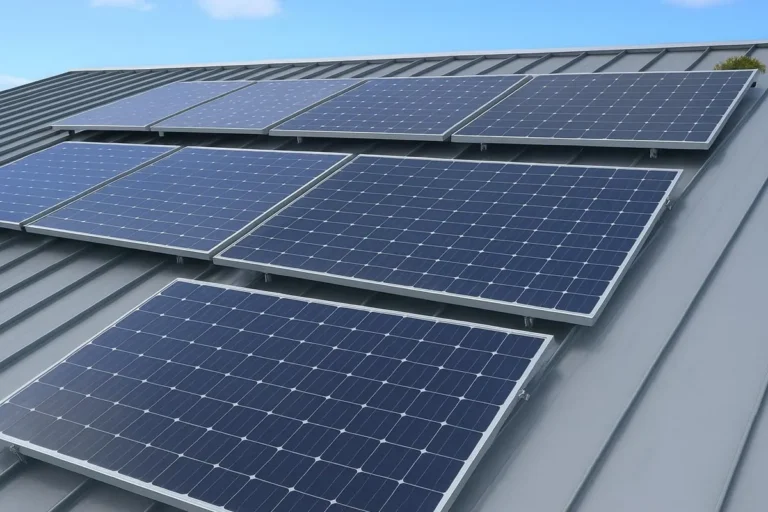
Standing-Seam Metal Solar-Laminate Systems: Lightweight metal roofs featuring high recycled content paired with flexible photovoltaic strips, offering exceptional longevity and complete recyclability.
-
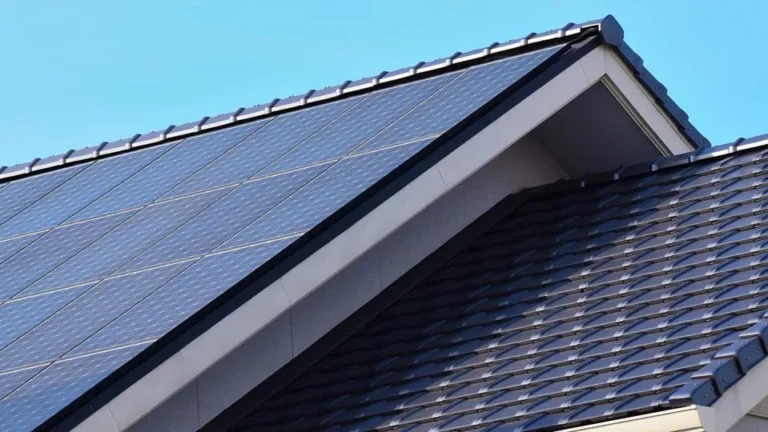
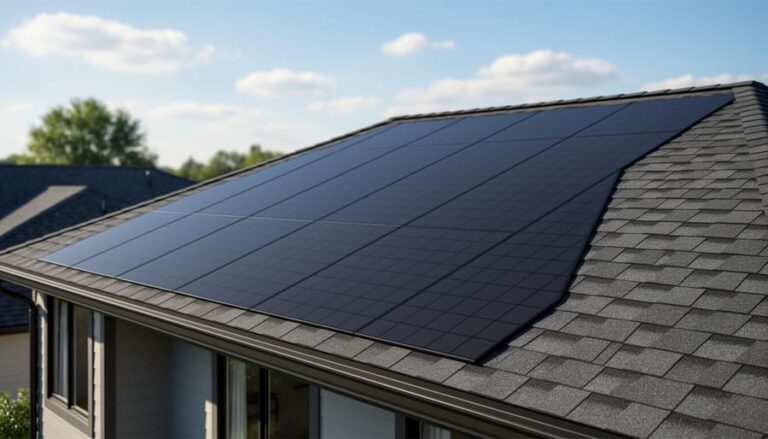
Monocrystalline Integrated Solar Shingles: Sleek, low-profile glass-front tiles that replace traditional roofing while providing high-efficiency energy generation.
-
Recycled Polymer Composite Solar Shingles: Lightweight shingles manufactured from post-consumer recycled plastics and rubber, molded to mimic natural slate with embedded solar cells.
-
Clay and Concrete Tile Integrated Arrays: Mineral-based, highly durable tiles featuring specialized high-efficiency solar inserts designed for high-wind environments.
-
Cool-Roof Coated Rack-Mounted Platforms: Traditional high-efficiency panels mounted over high-albedo, reflective cool-roof membranes that reduce urban heat island effects.
-
Bivalent Solar-Thermal Hybrid Systems: Dual-action roofing assets that generate electricity while capturing thermal fluid heat to support domestic hot water systems with zero waste heat discharge.
-
Perimeter Stone-Coated Steel Solar Systems: Durable steel substrates coated with natural stone granules, integrating high recycled content with robust weather resistance.
-
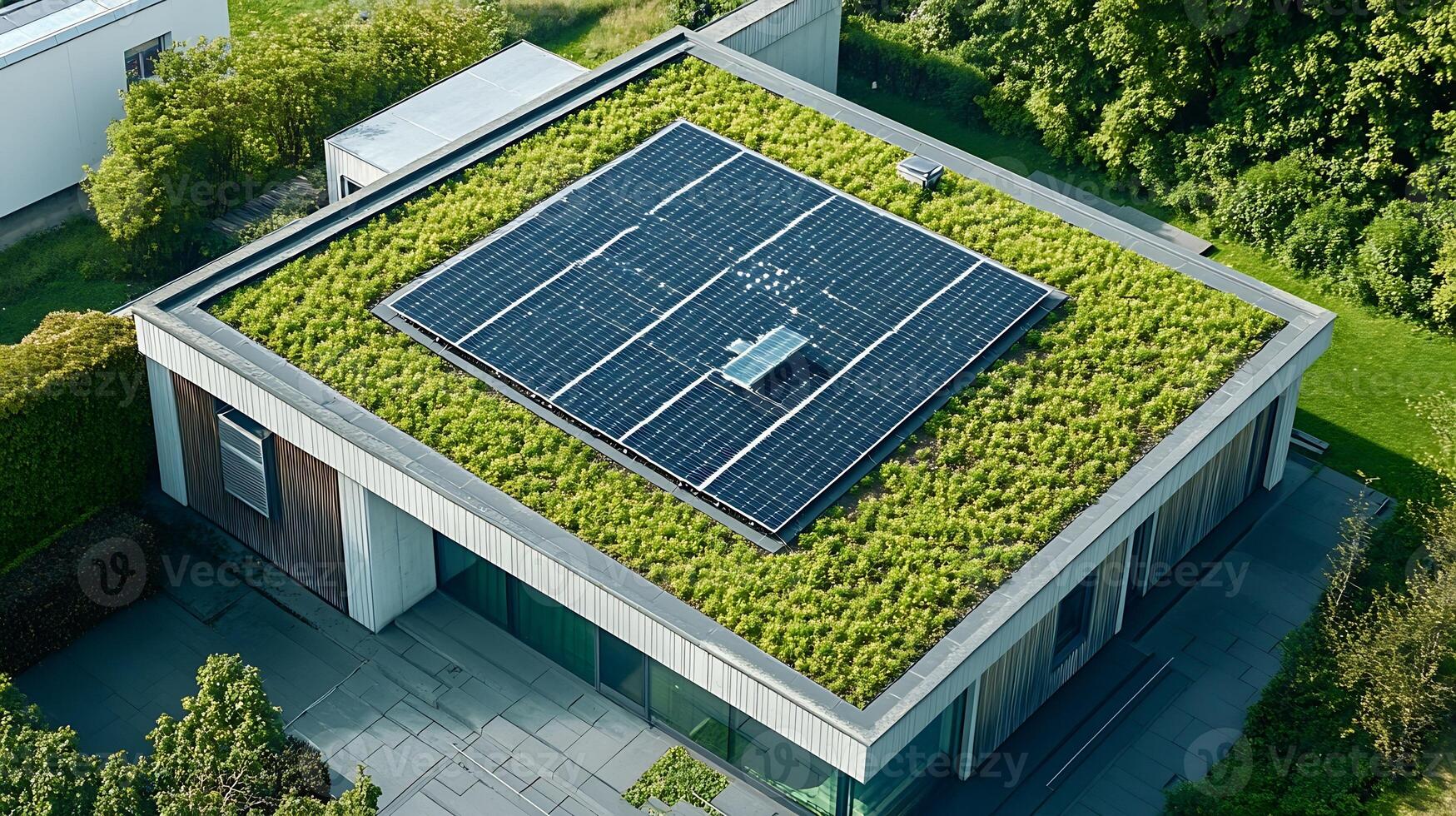
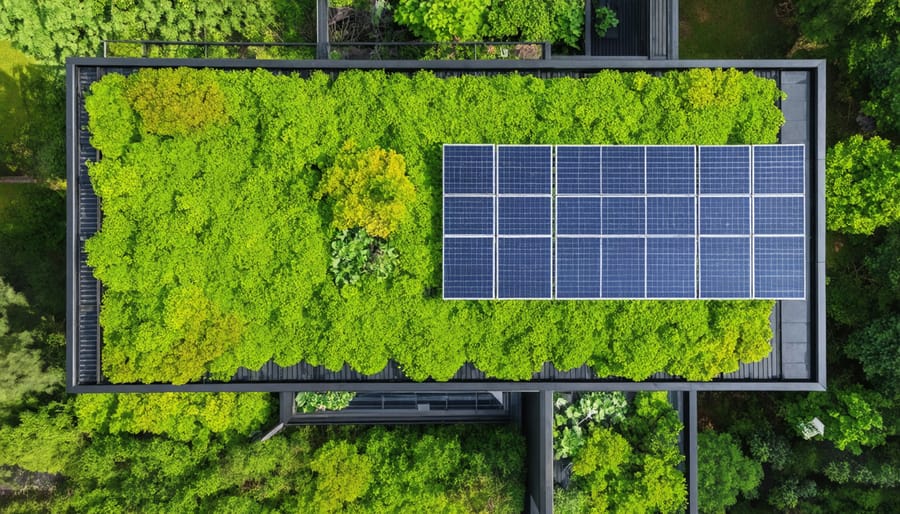
Modular Living-Roof Hybrid Arrays: Integrated configurations combining extensive vegetative sedum planting zones with elevated photovoltaic arrays to maximize biodiversity.
Comparative Overview of Core Sustainable Roofing Typologies
| Typology | Embodied Carbon Profile | Expected Lifespan | Primary Environmental Benefit | Optimal Eco-Property Context |
| Standing-Seam Metal + Solar | Medium-Low | 40 – 70 Years | 100% recyclable metal base; long operational durability | Modern, industrial, or rural sustainable builds |
| Integrated Solar Shingles | Medium-High | 25 – 30 Years | High aesthetic harmony; high-efficiency energy yield per square foot | Suburban properties with strict architectural or HOA covenants |
| Recycled Polymer Shingles | Low | 30 – 50 Years | Diverts waste streams (plastics/rubber) from landfills | Eco-conscious residential retrofits requiring low dead load |
| Clay / Mineral Tile Solar | High | 50 – 100+ Years | Non-toxic, abundant raw earth materials; extreme longevity | Arid, high-temperature climates with strong structural framing |
Realistic Decision Logic
Selecting the ideal solution requires balancing site-specific ecological priorities. If a property owner prioritizes absolute material circularity and minimal lifecycle waste, a high-recycled-content standing-seam metal roof represents an exceptional choice. If strict municipal aesthetic guidelines prohibit visible metal, monocrystalline integrated options provide the necessary visual integration. For properties emphasizing waste diversion, recycled polymer composite options offer a compelling balance of light weight and repurposed material content.
Best Solar Roofing for Eco Friendly Properties: Key Options and Criteria
When evaluating the market to determine the best solar roofing for eco friendly properties, decision-makers must weigh technical compatibility against ecological metrics. No single material fits every climate zone or architectural style. Therefore, utilizing a structured comparative framework ensures that the selected asset aligns with regional weather patterns, structural load limits, and long-term sustainability certifications.
Furthermore, integrating these systems requires assessing local building energy codes, electrical grid export tariffs, and microclimate characteristics. Properties situated in high-temperature arid zones benefit immensely from cool-roof thermal performance, whereas properties in high-latitude forested regions require optimized micro-inverter architectures to overcome variable shading.
Detailed Real-World Scenarios
To understand how sustainable solar roofing systems perform in operational practice, examine the following scenarios, complete with physical constraints, decision points, and failure modes.
A : The Off-Grid Ecological Retreat in a Temperate Forest
-
Context: A remote, sustainably built timber-framed home surrounded by mature evergreen trees.
-
Constraints: Strict ecological preservation mandates; partial seasonal shading from surrounding forest canopy; requirement for maximum energy autonomy.
-
Decision Points: Selecting a lightweight recycled polymer composite shingle system equipped with module-level power optimizers to mitigate dynamic forest canopy shading.
-
Failure Modes: Accumulation of pine needles and organic debris in shingle recesses causing localized moisture retention and accelerated biological growth.
-
Second-Order Effects: The home achieves net-zero energy status while preserving the natural forest aesthetic, though routine seasonal clearing is required.
B : The Urban Commercial-Residential Mixed-Use Zero-Carbon Building
-
Context: A low-rise urban building pursuing rigorous net-zero building certifications.
-
Constraints: Strict structural dead-load limits on an aging timber-and-steel urban roof structure; need to offset heavy daytime commercial cooling loads.
-
Decision Points: Deploying a high-albedo cool-roof metal membrane paired with lightweight, high-efficiency thin-film solar laminates.
-
Failure Modes: Thermal expansion differentials between the metal substrate and polymer laminates leading to edge peeling under intense urban heat island spikes.
-
Second-Order Effects: Drastic reduction in internal cooling energy consumption and peak demand charges, directly supporting urban sustainability compliance.
C : The High-Wind Coastal Eco-Resort Pavilion
-
Context: A hospitality pavilion located in a hurricane-prone coastal ecosystem.
-
Constraints: Severe wind-uplift pressures; corrosive saltwater spray environment threatening electrical and structural components.
-
Decision Points: Utilizing heavy interlocking clay-tile solar assemblies with marine-grade stainless steel fastening hardware and corrosion-resistant micro-inverter housings.
-
Failure Modes: Salt crust accumulation on glass surfaces degrading solar transmittance and energy harvest efficiency over time.
-
Second-Order Effects: Structural survival during severe storm events while supplying reliable renewable microgrid power to the facility.
D : The Suburban Net-Zero Housing Development
-
Context: A master-planned community of modern eco-homes governed by strict architectural review boards.
-
Constraints: Prohibition of traditional rack-mounted panels; mandate for uniform roof aesthetics across all properties.
-
Decision Points: Implementing standardized monocrystalline integrated solar shingles across all south-facing roof planes.
-
Failure Modes: Complex flashing failures at roof valleys due to rigid tile geometry mismatches during multi-trade installation.
-
Second-Order Effects: Enhanced community-wide property valuation and unified curb appeal, coupled with high aggregate neighborhood grid export capacity.
Planning, Cost, and Resource Dynamics
Evaluating the financial and ecological resource allocation for sustainable solar roofing requires a comprehensive total-cost-of-ownership analysis.
Direct costs include specialized sustainable material procurement, certified ecological installation labor, structural engineering reviews, and electrical interconnection hardware. Indirect costs include the ecological cost of material transport, waste disposal fees for old roofing tear-offs, and potential insurance premiums associated with high-durability impact-resistant materials. Because eco-friendly solar roofing serves a dual protective and generative purpose, its upfront premium must be amortized against decades of avoided electricity bills, carbon tax credits, and the elimination of interim roof replacements.
Opportunity costs also factor into resource planning. Capital allocated to premium sustainable building envelopes cannot be deployed elsewhere, but it protects the property against rising utility tariffs and volatile fossil fuel markets while securing long-term real estate valuation premiums.
Cost Range and Variable Breakdown
| Expenditure Category | Typical Cost Share | Primary Resource Drivers | Ecological & Economic Variability |
| Sustainable Material Procurement | 45% – 55% | Recycled content grade, integrated photovoltaic tier | Global supply chain scarcity, raw mineral costs |
| Specialized Installation Labor | 20% – 30% | Dual-trade certification (roofing and electrical) | Regional labor market constraints, roof pitch complexity |
| Structural & Environmental Engineering | 10% – 15% | Life-cycle carbon assessments, load-bearing calculations | Municipal green building code friction |
| Balance of System & Storage | 5% – 10% | Eco-friendly balance hardware, micro-inverters | Integration with home battery storage microgrids |
Tools, Strategies, and Support Systems
Deploying and maintaining sustainable solar roofing systems relies on advanced digital tools, diagnostic instruments, and environmental assessment frameworks.
-
Lifecycle Carbon Assessment (LCA) Software: Specialized engineering platforms used to calculate the cradle-to-grave embodied carbon footprint of selected roofing materials.
-
Solar Irradiance and Shading Simulators: Digital CAD tools utilizing LIDAR data to model microclimate solar exposure and optimize generation potential.
-
Infrared Thermography Drones: Aerial diagnostic tools used to scan active arrays for hidden electrical resistance hotspots and thermal efficiency drops.
-
Megohmmeter Insulation Testers: High-precision electrical instruments used during construction to verify the integrity of concealed DC wiring harnesses.
-
Cool-Roof Albedo Spectrometers: Field measurement devices used to verify solar reflectance and thermal emittance ratings of reflective roof membranes.
-
Utility Interconnection and Net-Billing Portals: Digital submission workflows required to process regional renewable energy export agreements.
-
Moisture Intrusion and Leak Detectors: Sub-deck sensor arrays that monitor hidden envelope humidity to prevent structural wood rot.
-
Sustainable Supply Chain Auditing Frameworks: Traceability protocols ensuring that silicon, rare earth minerals, and recycled polymers adhere to strict ethical labor standards.
Risk Landscape and Failure Modes
Every sustainable roofing installation operates within a complex matrix of environmental and mechanical risks. Understanding compounding failure modes is essential for long-term asset preservation.
The primary structural risk vector is envelope water breach. Because sustainable integrated solar roofs combine weather-shedding surfaces with high-voltage electrical architecture, any failure in flashing, gaskets, or underlayment allows moisture to penetrate structural framing. In eco-friendly properties utilizing natural wood or sustainable insulation materials, undetected moisture intrusion rapidly causes structural mold and decay.
A secondary risk category involves thermal degradation and material fatigue. Sustainable polymers and composite roofing materials are exposed to intense ultraviolet radiation and thermal cycling. If expansion joints are improperly engineered, daily thermal expansion and contraction can warp panels, compromising waterproof seals and fracturing internal photovoltaic circuits.
Operationally, component obsolescence presents a significant threat to long-term sustainability. If a manufacturer discontinues a proprietary eco-shingle line halfway through its design life, sourcing exact environmental replacements for storm damage repairs becomes impossible, undermining the property’s uniform sustainability profile.
Governance, Maintenance, and Long-Term Adaptation
Protecting the ecological and financial yield of a sustainable solar roof requires structured governance and disciplined operational maintenance. Assuming an eco-friendly roof functions indefinitely without human oversight leads to performance drift and envelope vulnerability.
Maintenance protocols must be integrated into property management schedules. Routine inspections should verify the integrity of flashing seals, clear vegetative debris from drainage channels, and ensure that micro-inverter communication links remain active. In regions prone to environmental pollutants or dust accumulation, gentle, non-abrasive washing preserves optimal solar transmittance.
Long-Term Operational Checklist
-
Quarterly Telemetry Review: Audit cloud-reported generation data against regional weather models to detect hidden string failures or shading anomalies.
-
Semi-Annual Envelope Inspection: Check roof valleys, flashings, and perimeter edges for physical storm damage, pest intrusion, or debris buildup.
-
Annual Thermal Imaging Scan: Conduct infrared thermography during peak solar irradiance to identify localized electrical resistance or failing bypass diodes.
-
Triennial Electrical Integrity Audit: Test DC circuit insulation resistance and verify proper operation of rapid shutdown safety systems.
-
Decennial Power Electronics Review: Evaluate inverter performance health and plan capital reserves for mid-lifecycle component recycling and replacement.
Measurement, Tracking, and Evaluation
Assessing the ongoing efficacy of sustainable solar roofing requires balancing leading and lagging indicators across both energy output and environmental metrics.
Leading indicators provide early warning of developing system faults before failure occurs. These include subtle increases in string voltage variance, minor communication dropouts, or anomalous temperature spikes within integrated modules. Tracking these metrics enables proactive service interventions.
Lagging indicators measure cumulative historical results. The primary lagging metrics include specific annual energy yield ($kWh/kW_p$) and net carbon emissions offset verified against baseline building energy models.
Documentation and Verification Examples
-
Cradle-to-Grave LCA Certificate: Documentation detailing the embodied carbon footprint and recycled material content of the installed roofing assemblies.
-
Commissioning Electrical Report: Baseline verification records for open-circuit voltages, short-circuit currents, and insulation resistance.
-
Monthly Performance Ratio Ledger: Tracking logs comparing actual grid export and self-consumption against theoretical environmental generation models.
-
Component Recycling Passport: A centralized registry documenting material composition to ensure proper recycling pathways at the end of the asset lifecycle.
Common Misconceptions and Oversimplifications
The growing demand for eco-friendly properties has generated persistent myths regarding sustainable solar roofing.
-
Myth 1: Any solar roof is completely carbon-neutral from day one.
-
Correction: Manufacturing photovoltaic cells and specialized tiles incurs an initial embodied carbon debt that requires several years of clean energy generation to fully offset.
-
-
Myth 2: Eco-friendly solar roofs require zero structural maintenance.
-
Correction: While highly durable, all roofs require periodic inspection, inverter servicing, and occasional debris clearing to maintain peak generation.
-
-
Myth 3: Recycled polymer shingles have the same lifespan as heavy slate or metal.
-
Correction: While excellent for diverting waste, composite and polymer options generally degrade faster under intense UV exposure than mineral-based slate or 100-percent recyclable metal.
-
-
Myth 4: Integrated solar tiles are always more eco-friendly than standard panels.
-
Correction: Integrated tiles often have lower energy conversion efficiencies per square foot than standard panels, requiring a larger active surface area to achieve net-zero energy goals.
-
-
Myth 5: Cool-roof coatings eliminate the need for solar generation.
-
Correction: Reflective cool roofs reduce cooling loads, but they do not generate electricity; combining both strategies is necessary for true property self-sufficiency.
-
-
Myth 6: Building permits for sustainable roofs bypass standard structural codes.
-
Correction: Because integrated solar roofs alter both the electrical grid connection and the structural building envelope, they face rigorous dual-discipline municipal permitting.
-
-
Myth 7: Sustainable roofing materials cannot withstand severe weather.
-
Correction: Modern engineered metal, reinforced composite, and heavy mineral tiles undergo rigorous wind and impact testing, often exceeding traditional asphalt durability.
-
Ethical, Practical, or Contextual Considerations
Deploying sustainable solar roofing intersects with broader global supply chain realities. The extraction of high-purity silicon, silver, and rare earth minerals required for photovoltaic cells involves complex environmental and ethical considerations. Selecting manufacturers that enforce rigorous supply chain transparency, conflict-free mineral sourcing, and closed-loop recycling guarantees is vital for maintaining true ecological integrity.
Additionally, local electrical grid capacity plays a practical role. In regions with high distributed solar saturation, midday generation spikes can saturate local distribution transformers. Designing properties with intelligent behind-the-meter energy storage ensures that surplus renewable generation is captured locally rather than causing grid curtailment.
Conclusion
Selecting the best solar roofing for eco friendly properties requires an uncompromising commitment to structural engineering, material science, and lifecycle transparency. By moving past superficial marketing narratives and embracing rigorous performance frameworks, property owners can deploy energy assets that protect building envelopes, minimize embodied and operational carbon, and deliver enduring long-term value. True sustainability in this domain demands patience, intellectual honesty, and an unwavering focus on systemic harmony over short-term expediency.